Life After Dictatorship: Authoritarian Successor Parties Worldwide Conference
Given the chance to choose their leaders through free and fair elections after transitions to democracy, surprisingly large numbers of people vote for political parties with deep roots in former dictatorships. Such “authoritarian successor parties”—parties formed by high-level incumbents of former authoritarian regimes that continue to operate following democratization—can be found in countries around the world.
Many authoritarian successor parties are key political actors, despite often having origins in regimes implicated in large-scale human rights violations. Perhaps even more surprisingly, many of these parties can be seen to have positive as well as negative consequences for new democracies. In fact, no consensus exists on whether such parties are primarily helpful or harmful to democracy.
This conference, organized by Visiting Fellow James Loxton and Faculty Fellow Scott Mainwaring, brings together a range of scholars to examine for the first time the phenomenon of authoritarian successor parties across regions. Experts on political parties in Africa, Asia, Europe, and Latin America will address three broad questions from a comparative perspective:
-
What explains the existence of authoritarian successor parties?
-
Why are some authoritarian successor parties more successful than others?
-
What effects do authoritarian successor parties have on democratic regimes?
The conference aims to launch a cross-regional conversation on the conditions under which authoritarian successor parties can be seen as harmful or helpful to democracy, as well as to explore the roots of success and failure of such parties.
An edited volume gathering contributions and insights from the conference is planned.
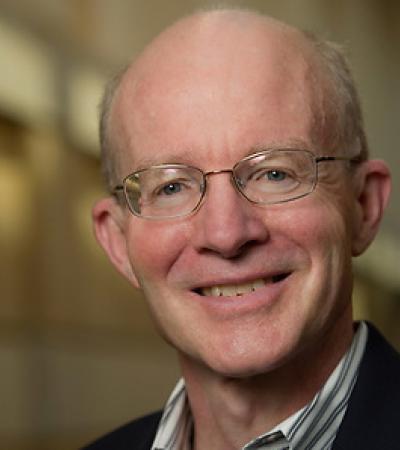
Scott Mainwaring
Scott Mainwaring is the Eugene P. and Helen Conley Professor of Political Science at the University of Notre Dame. He is also a faculty fellow at the Kellogg Institute for International Studies, where he previously served as director for 13 years and an Advisory Board member from 2017-2023. He has been a Kellogg Institute faculty fellow since 1983...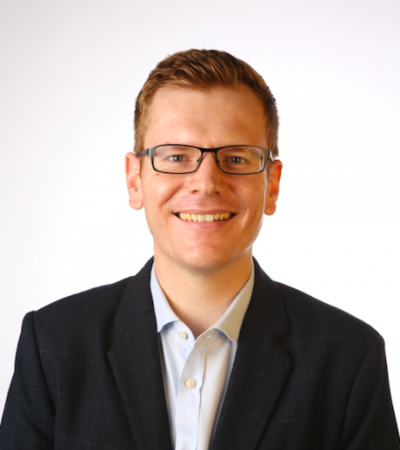
James Loxton
Former Kellogg Visiting Fellow James Loxton (2014-15), a political scientist specializing in political parties, regimes, and the comparative politics of Latin America, is a senior lecturer in comparative politics in the Department of Government and International Relations at the University of Sydney. His research focuses on two main subjects: conservative parties in Latin America and authoritarian successor parties worldwide...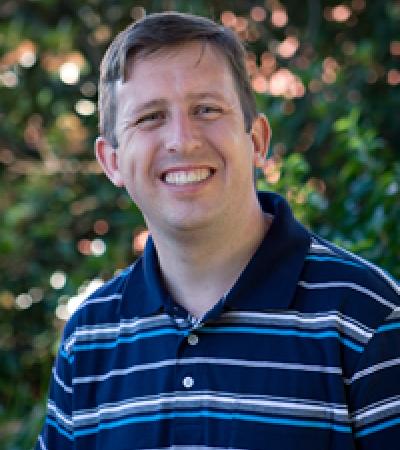
Matthew Singer
This profile was current as of 2015, when he was part of the on-campus Kellogg community. Matthew Singer (PhD, Duke University), associate professor of political science at the University of Connecticut, joins the Kellogg Institute for the spring 2015 semester...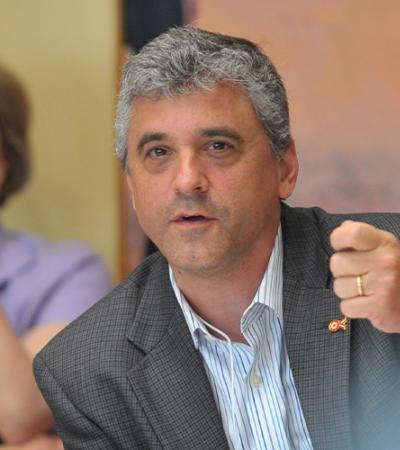
Steven Levitsky
Steve Levitsky is David Rockefeller Professor of Latin American Studies and professor of government at Harvard University, and co-author, with Daniel Ziblatt, of the bestselling books, How Democracies Die (Crown, 2018) and Tyranny of the Minority: Why American Democracy Reached the Breaking Point (Crown, 2023). Levitsky is a former Kellogg visiting fellow and an expert on Latin American politics...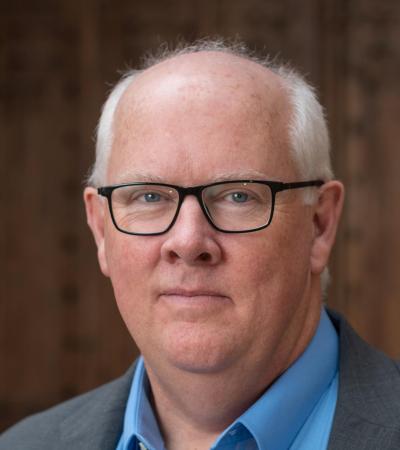
Timothy Power ‘93
Kellogg Institute Advisory Board member Timothy J. Power is head of the Social Sciences Division at the University of Oxford, responsible for 15 departments including three professional schools. He has been affiliated with Kellogg as a graduate student (PhD 1993, political science), a visiting fellow (fall 2005), and a working paper author (1988, 1999)...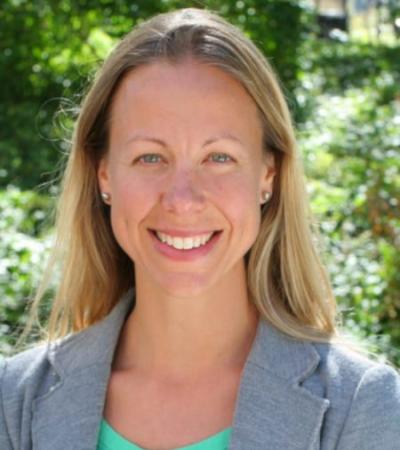
Rachel Beatty Riedl
Rachel Beatty Riedl is the Peggy J. Koenig ’78 Director of the Center on Global Democracy in the Brooks School of Public Policy, and a Professor in the Brooks School and Department of Government at Cornell University...