



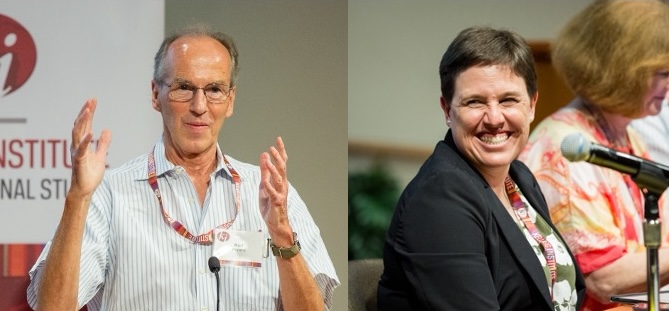
 Backsliding, Populism, and Strategies for Democratic Defense: A Conversation with Laura Gamboa and Kurt Weyland
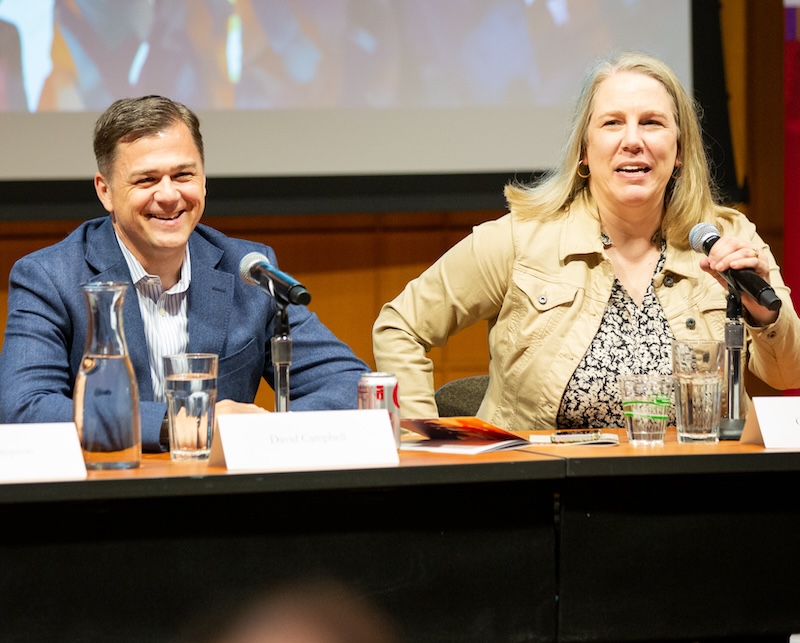 The US Election and its Consequences for Democracy with Political Scientists Dave Campbell and Christina Wolbrecht
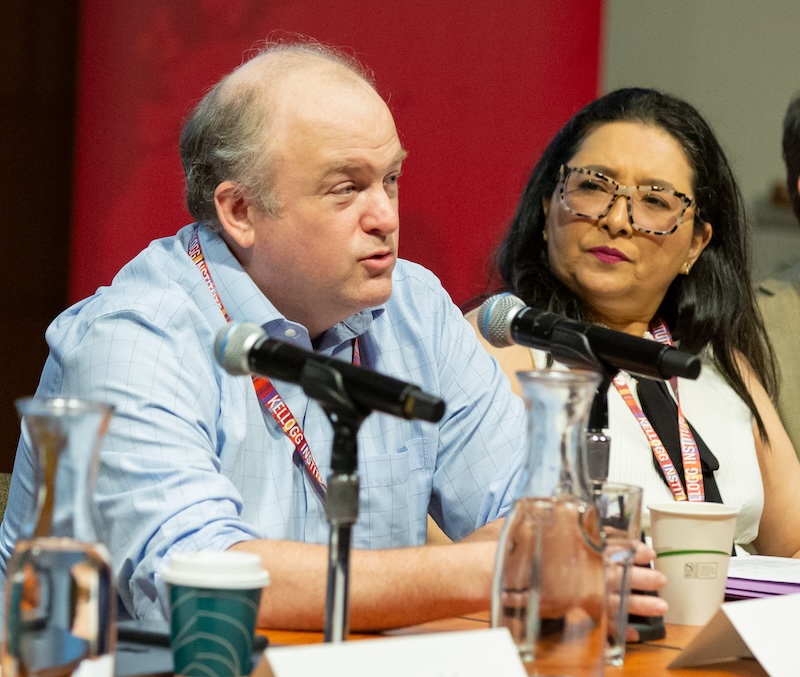 International Threats, Misinformation, and Antidemocratic Forces, with Political Scientists María Isabel Puerta Riera and Steven Lloyd Wilson
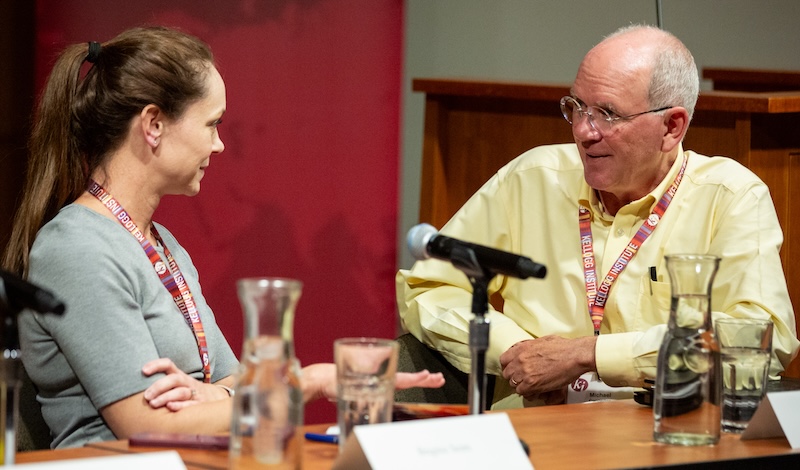 Global Democracy Series - Measuring the State of Democracy with Political Scientists Michael Coppedge and Brigitte Seim
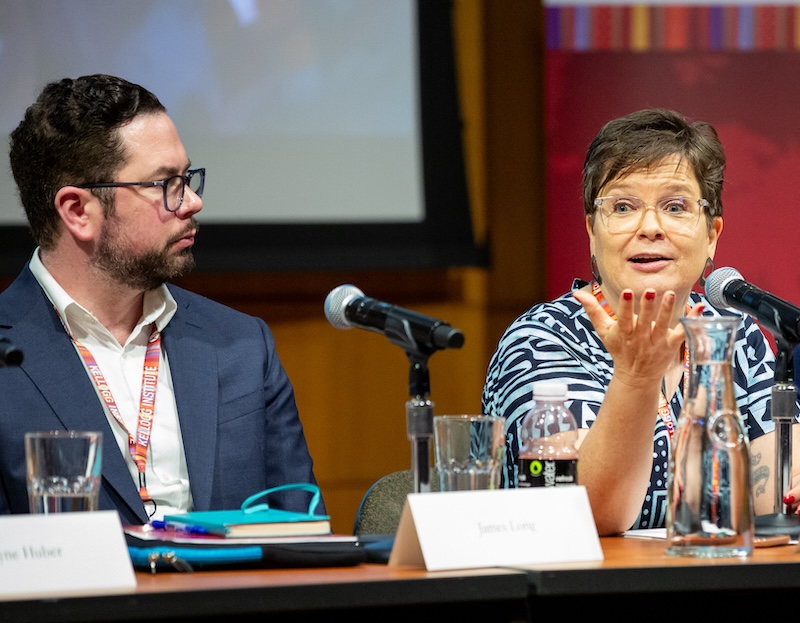 Global Democracy Series – Inequality, Human Development, and Democracy with Helena Hofbauer Balmori and James Long
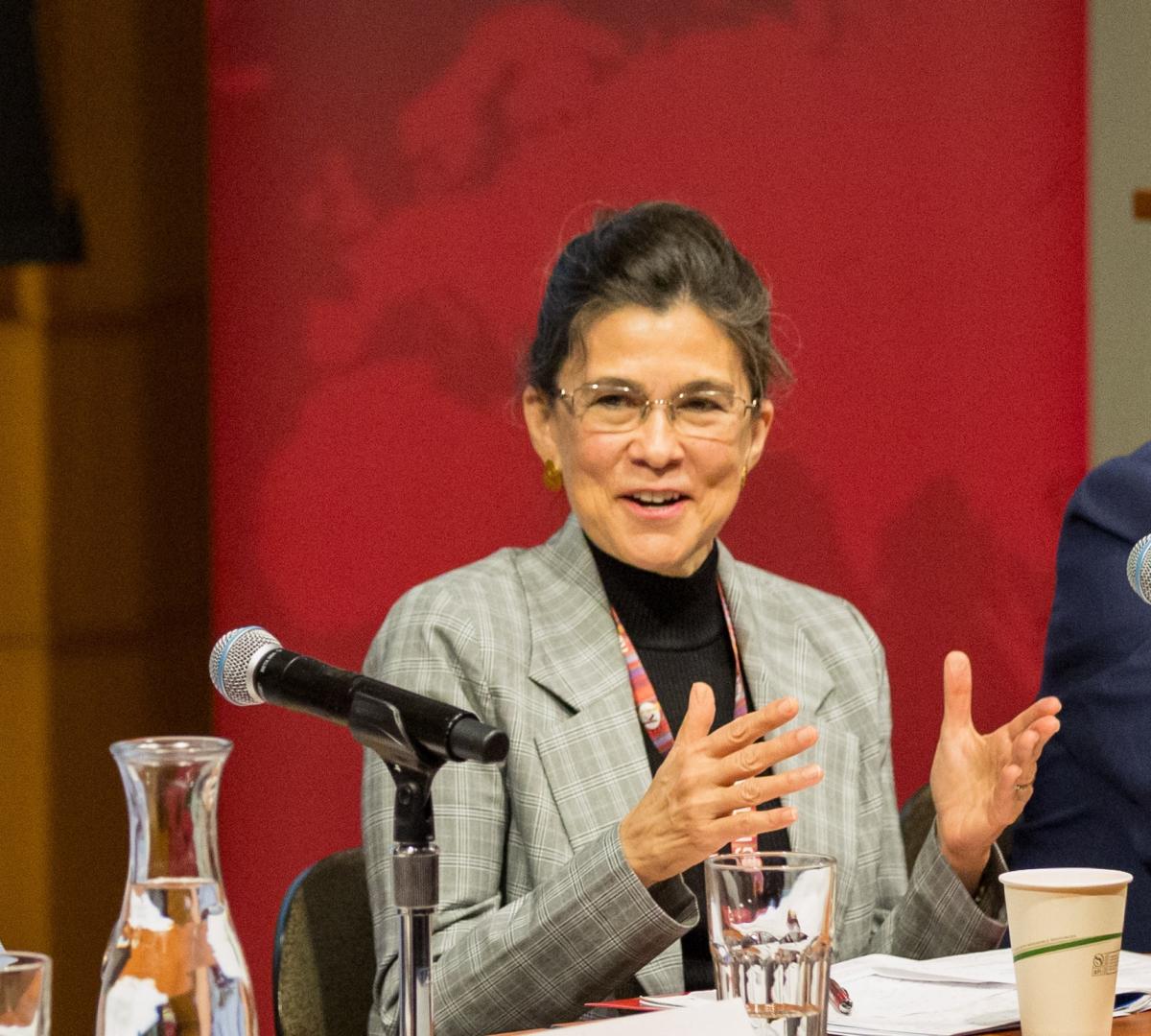 Global Democracy Series – Four Decades of Democracy in Latin America with Political Scientists Wendy Hunter and Benjamín Garcia Holgado
Kellogg & the Democracy Initiatives
With its 40-year history of excellence in the study of global democracy, the Kellogg Institute is a pillar of both the Notre Dame Democracy Initiative and the Democracy, Governance, Institutions and Rights program of the Keough School of Global Affairs.
About
With its 40-year history of excellence in the study of global democracy, the Kellogg Institute is a pillar of both the Notre Dame Democracy Initiative and the Democracy, Governance, Institutions and Rights program of the Keough School of Global Affairs.
As part of its 2023-2033 Strategic Framework, the University established the campus-wide Notre Dame Democracy Initiative to address the increasing challenges to the state of democracy at home and abroad. The Initiative seeks to establish the university as a leader in the study of democracy both in the US and worldwide, as a convenor for conversations about and actions to preserve democracy, and as a model for the formation of civically engaged citizens and public servants. Bridging research, education, and policy work across campus, the Initiative also extends beyond campus to policymakers and federal agencies in Washington, DC.
These university goals parallel one of four core research programs established by the Keough School of Global Affairs through its Strategic Plan 2030. This Democracy, Governance, Institutions and Rights program seeks to examine local and global threats to democracy and explore how best to build and support effective states, expand political participation, strengthen the rule of law, improve the protection of human and civil rights, and enhance cooperation across national borders.
In the name of promoting global democracy as part of the Keough School and the University of Notre Dame, the Kellogg Institute is leading efforts to build on its strong academic foundation. The institute is hiring new faculty with democracy expertise (including two junior faculty members brought on in 2024-25), promoting visiting fellowships annually to scholars working on global democracy, and currently funding four PhD students for the study of democracy.
Kellogg is also leading efforts on campus to engage students and faculty on campus and abroad in discussions about global democracy with conferences and other events, including those listed below.
These events during the academic year lead up to the annual Global Democracy Conference, to be held this year May 18 - May 21, 2026. Every year, this conference brings together leaders from the areas of academia, policy-making, and on-the-ground practice to discuss topics related to the state of democracy in the world. With participants including public scholars, journalists, religious and business leaders, and policymakers, the conference sessions showcase new research initiatives at Notre Dame and other top research universities, integrating the experience of leaders in civil society, religion, business, and politics to envision how to confront challenges to democracy.
Global Democracy Conference 2026
The Global Democracy Conference (GDC) returned in 2026, with scholars, policymakers, and activists coming together at the University of Notre Dame to explore urgent strategies for defending and renewing democracy worldwide. That year’s theme, Confronting Public Support for Anti-Democratic Leaders, guided two days of keynotes, plenary roundtables, and breakout sessions featuring academic and policy partners of the Kellogg Institute.
In old and new democracies, voters appeared increasingly willing to support radical candidates who, once elected, dismantled democracy from the inside. Judges, legislators, journalists, and civil society could resist the process of democratic backsliding, but mere containment was insufficient. Reversing the process ultimately required electoral majorities committed to consistently voting democratic parties into office and rejecting illiberal electoral appeals at the ballot box. This conference was guided by the following key questions:
- What factors had prompted the rise of public support for anti-democratic leaders?
- How did illiberal executives rally public approval?
- Under what conditions could democratic actors mobilize public support for democracy?
- What strategies were more effective to confront anti-democratic leaders at the ballot box?
- What role did digital technologies, such as artificial intelligence and social media, play in the mobilization of public support?
The 2026 Global Democracy Conference convened scholars and practitioners to explore new areas of collaboration between academia and the policy world, connected scholars and practitioners from different regions of the world, and improved our collective ability to understand and address antidemocratic support among voters. The GDC included two types of sessions: Plenary roundtables, colored gold on the conference schedule, featured 12-minute presentations by academics and practitioners, followed by a conversation led by a moderator. Breakout sessions, colored red on the conference schedule, featured topics and formats proposed by leading academic and policy organizations at the Kellogg Institute’s invitation, broadening the range of conversations at the GDC.
GDC 2026 Conference Briefs
Why do voters back leaders who dismantle democracy once in office—and how can democratic actors win them back at the ballot box? The 2026 briefs take up that question across six expert roundtables.
-
When Does Citizen Support for Democracy Erode—or Endure?
Examines what leads voters to abandon or hold onto their democratic commitments, and where the openings for renewal lie.
-
When Civil Society Helps—or Hurts—Public Support for Democracy
Shows how civic organizations can both strengthen and erode democratic attitudes, and how to steer them toward reinforcing democracy.
-
How Authoritarian Leaders Manufacture Legitimacy—and How Democratic Movements Can Counter Them
Unpacks the tactics illiberal leaders use to appear legitimate, and the counter-strategies available to democratic movements. -
Why Citizens Turn Away from Human Rights—and How to Win Them Back
Explores why public support for human rights erodes, and how advocates can rebuild it in a skeptical climate. -
Citizen Participation and New Media
Looks at how digital platforms and AI reshape political participation—for better and worse—in the contest over democracy. -
The Autocratic Campaign Toolkit—and Effective Democratic Responses
Details the playbook illiberal candidates use to win elections, and the democratic responses that prove most effective against it.
Voices from the 2026 Global Democracy Conference
Special series: “Voices from the 2026 Global Democracy Conference,” featuring panelists who participated in the 2026 GDC, hosted by the Kellogg Institute between May 19-20, 2026 at the University of Notre Dame.
 Educar para la democracia: memoria, paz y universidad con Luis Fernando Múnera Congote, SJ
En este episodio de Global Stage, Alejandro González conversa con el padre Luis Fernando Múnera Congote, SJ, rector de la Pontificia Universidad Javeriana de Colombia, sobre el papel de la educación y las universidades en la defensa de la democracia. A partir de su experiencia en temas de paz, reconciliación, y justicia social, el padre Múnera reflexiona sobre la memoria histórica, la justicia transicional, la autonomía universitaria y la importancia de formar ciudadanos comprometidos con sociedades más democráticas.
Episode: 02
Published: July 20, 2026
Length: 20:44
 Nonviolent Strategy in an Authoritarian Age with Jhanisse Vaca Daza and Kevin Sheives
In this special Global Stage episode from the 2026 Global Democracy Conference, Kellogg Doctoral Student Affiliate Patrick McQuestion speaks with human rights activist Jhanisse Vaca Daza and Kevin Sheives of the International Forum for Democratic Studies about how democracies can push back against authoritarianism. Drawing on cases from Bolivia, Venezuela, Ukraine, Iran, and beyond, the conversation explores elections under authoritarian pressure, nonviolent resistance, parallel vote counts, civic mobilization, foreign influence, and the importance of building strong local leadership before moments of democratic transition arrive.
Episode: 01
Published: June 29, 2026
Length: 30:18
Global Democracy Conference 2025
The road to dictatorship was cleared by the expansion of executive power. Whether in Hungary, Turkey, El Salvador, or Venezuela, elected presidents and prime ministers used their constitutional authority and legislative majorities to undermine, and ultimately capture, other institutions.
These countries were just illustrative of a broader trend: anti-democratic executives had progressively packed the judiciary, purged the civil service, undermined electoral management bodies, silenced independent media, prosecuted dissidents, restricted non-governmental organizations, regulated the business sector in favor of cronies, and politicized the security forces. Small actions against those institutions, under the cover of executive immunity, eventually accumulated into the breakdown of democracy.
- How could we distinguish legitimate conflicts among institutions, part of normal democratic politics, from dangerous executive aggrandizement?
- What was known to be the best strategies to contain or delay the anti-democratic expansion of executive power?
- Could democracy advocates act effectively against illiberal executives without embracing radical positions themselves?
- What instruments did they mobilize? Could executive overreach be reversed? What did success look like?
The 2025 Global Democracy Conference (GDC) convened scholars and practitioners to address these urgent questions, combining the inspiration of academic research and practical experience. The GDC adopted a comparative perspective to inspire new research questions with practical implications, and to support activist engagement in academic and policy debates.
The ultimate goal of the conference was to improve our collective ability to identify antidemocratic behaviors and the effective ways to resist them. The GDC also aimed to open new areas of collaboration between academia and the policy world, as well as between scholars and practitioners based in different countries.
GDC 2025 Brief Series
In 2025, the GDC convened global experts to examine how executives—from Hungary to Venezuela—have systematically undermined independent institutions and cleared the path toward authoritarianism. Each of the conference’s panels explored executive overreach in a different arena, from electoral politics, to the judiciary, to traditional and social media.
In two pages, the GDC Conference Briefs aim to capture key insights to identify and hold back executive overreach in each of the identified arenas, as shared by expert panelists in the conference sessions. The briefs are further enriched by takeaways from broader conference conversations, as well as the recent literature on democratization. Their objective is to help practitioners, policymakers, activists, funders and applied researchers to:
- Clearly identify patterns of executive overreach in a timely manner via a detailed description of overreach attempts, aided by the inclusion of global examples.
- Design strategies to slow down or reverse executive overreach via the provision of key recommendations, aided by examples of resistance.
- Guide readers to additional resources, developed by the University of Notre Dame and the broader academic and practitioner community,
Together, these resources reflect the GDC’s commitment to bridging academic research and practical action for defending democracy worldwide. Explore the lessons captured in the official GDC 2025 briefs below:
Conference Brief 1: Executive Overreach and Democratic Backsliding
Conference Brief 2: Executive Overreach in the Electoral Arena
Conference Brief 3: Executive Overreach in the Legal System
Conference Brief 4: Executive Overreach and Civil Society
Conference Brief 5: Executive Overreach and Public Bureaucracies
Conference Brief 6: Executive Overreach, Mass Media, & Social Networks
GDC 2025 Videos
Keynotes
Keynote Presentation - Chief Justice Luís Roberto Barroso
Chief Justice, Brazilian Supreme Tribunal, Luís Roberto Barroso, is a prominent Brazilian jurist and legal scholar, who has had a distinguished career spanning academia, law practice, and the judiciary.
Keynote Presentation - Obiageli “Oby” Katryn Ezekwesili
Obiageli “Oby” Katryn Ezekwesili, an economic policy expert and social advocate, is senior economic adviser of the Africa Economic Development Policy Initiative.
Keynote Presentation - A. G. Sulzberger; "Journalism in a Democracy under Pressure"
A. G. Sulzberger, is chairman of The New York Times Company and publisher of The New York Times.
Panels
Executive Overreach and Democratic Backsliding
- Mary Gallagher, University of Notre Dame (Chair)
- Thomas Carothers, Carnegie Endowment for International Peace
- Scott Mainwaring, University of Notre Dame
The Electoral Arena: Opposition Parties and Electoral Management Bodies
- David Campbell, University of Notre Dame Democracy Initiative (Chair)
- Laura Gamboa, University of Notre Dame
- Holly Ann Garnett, Royal Military College of Canada
- Ugur Ozdemir, University of Edinburgh
- S. Y. Quraishi, Former Chief Election Commissioner of India
The Future of Global Democracy Promotions
- Andrés Mejía Acosta, University of Notre Dame, and Maura Policelli, University of Notre Dame (Co-chairs)
- Michael Coppedge, University of Notre Dame
- Kelley E. Currie, Atlantic Council
- Jennifer McCoy, Georgia State University
- David Salvo, Alliance for Securing Democracy, German Marshall Fund
The Legal System: Judges and Prosecutors
- Daniel Brinks, University of Texas, Austin (Chair)
- Diane Desierto, University of Notre Dame
- Benjamín García Holgado, University of Delaware
- Diana Kapiszewski, Georgetown University
- Julio Ríos-Figueroa, Instituto Tecnológico Autónomo de México (Mexico)
Civil Society: NGOs, Social Movements, and International Donors
- Helena Hofbauer Balmori, Ford Foundation (Chair)
- Michael Bernhard, University of Florida
- Aidan Eyakuze, Open Government Partnership
- Ewa Kulik-Bielinska, Stefan Batory Foundation
- Ann Mische, University of Notre Dame
The Bureaucracy: How Public Officials Resist Backsliding
- Susan Ostermann, University of Notre Dame
- Katherine Bersch, Davidson College
- Alexandre de Ávila Gomide, ENAP National School of Public Administration (Brazil)
- Russell Muirhead, Dartmouth College
- Zsuzsanna Szelényi, Democracy Institute Leadership Academy (DILA), Central European University, Hungary
Effective Responses to Executive Overreach: the Role of Civil Society
- Helena Hofbauer, Ford Foundation, and Andres Mejia Acosta, University of Notre Dame (Co-chairs)
- Juan Sebastián Chamorro, Former Candidate for the Presidency and Former Political Prisoner in Nicaragua
- John Koshy, Democracy Hub
- Ewa Kulik-Bielinska, Stefan Batory Foundation
- Miguel Loureiro, Institute of Development Studies
Mass Media and Social Networks: Journalists and Influencers
- Frank Langfitt, National Public Radio (Chair)
- Jeff Conroy-Krutz, Michigan State University
- Michael Mirny, International Research & Exchanges Board (IREX)
- James Odhiambo Okong'o, Journalist
- Nara Pavao, Federal University of Pernambuco (Brazil)
Scholars at Risk
The Kellogg Institute has a long history of hosting scholars at risk – those who hail from areas in the world where the individual's safety and/or scholarship are at risk, particularly those working to advance democracy, human rights, and human development in their home countries. Recent scholars hosted have included Nazarii Stetsyk from Ukraine, Juan Sebastián Chamorro from Nicaragua, Eric Lemus Escalante from El Salvador and Cristian Velix García from Guatemalan.
News:
Defending Democracy: Kellogg Visiting Fellows Work Towards Justice in their Native Countries
Video:
Global Democracy Conference 2024
The Global Democracy Conference (GDC), organized by the Kellogg Institute for International Studies, is an integral component of the broader University of Notre Dame Global Democracy Initiative designed to connect academic research and non-academic audiences. This forum projected the University as a leader and convener on questions of democracy, while simultaneously facilitating positive, tangible impact on global democratic practices.
With the theme "Understanding Today, Shaping Tomorrow," the inaugural GDC saw the Kellogg Institute convene leading defenders of global democracy at the University of Notre Dame for a series of profound, actionable conversations about the state of democracy around the world. Animated by an understanding of the multidimensional, complex nature of democratic erosion, this conference aimed to:
- Identify emerging challenges to democracies and possible solutions
- Highlight the research being undertaken by top universities in order to have meaningful impact in the world of policy
- Convene global actors who would help lay the foundation for partnerships with institutions and leaders who might utilize that research in protecting local democratic structures
The GDC included two types of sessions: panels, in which participants made formal, 12-minute presentations, and roundtables, which followed a conversational format led by a moderator. Sessions were organized in three thematic blocs:
- New Ideas: Panels primarily formed by academics. They presented original research on democracy to a broader audience, emphasizing the substantive relevance of their findings and mapping ongoing debates in the field. A practitioner might discuss how that line of research was relevant to practice.
- The State of the World: Roundtables formed by academics and practitioners. They assessed the state of democracy in particular countries or regions, with a particular interest in the near future.
- The Path Forward: Sessions focused on practical lessons to protect and promote democratic governance. Those sessions took the form of panels or roundtables and included practitioners or academics. Of particular interest were sessions focusing on specific sectors, such as industries (e.g., technology, finance) or professional fields (e.g., international law) discussing their ability to strengthen democracy.
GDC 2024 Conference Report
Many thanks to our 2024 Global Democracy Fellows and conference rapporteurs for their hard work in documenting the content of the inaugural Global Democracy Conference. Our special gratitude to Kellogg Doctoral Student Affiliate Patrick McQuestion for synthesising their work and putting together the text for this 2024 Global Democracy Conference Summary Report.
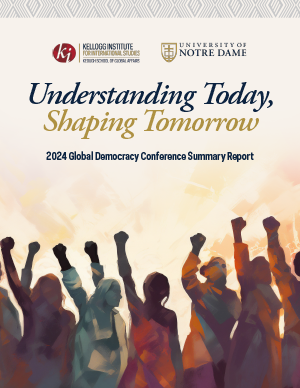
Global Democracy Conference 2024 Policy Takeaways
Lessons for Defending Democracy
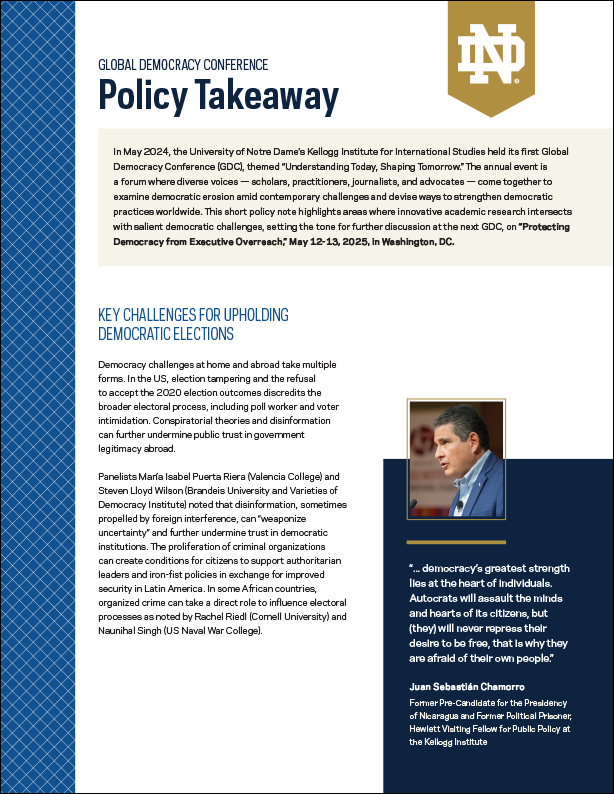
Get involved
- National Endowment for Democracy’s Reagan-Fascell Democracy Fellows Program, University of York's Human Rights Defenders Hub and the Kellogg Institute Hewlett Visiting Fellowship for Public Policy offer valuable support to scholars and activists who can contribute to democracy promotion on the ground.
- Develop adequate regulatory frameworks for AI and social media platforms to curb disinformation and verify information sources, addressing concerns of misinformation. AI technology can be used instead to cultivate a genuine “marketplace of ideas” (i.e. Pol.is ) to crowd out disinformation.
-
Develop scholar-advocate partnerships for democracy-promotion such as the Digital Society Project and the Consortium for Political Process Strengthening (CEPPS) to combat the sources and effects of disinformation with grounded advocacy.
Lessons for Enhancing Democracy
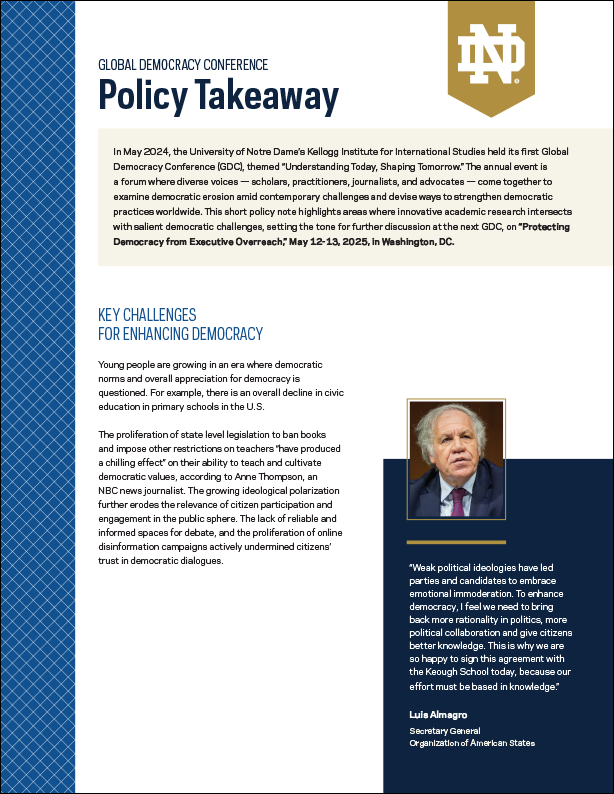
Get involved
- USAID, Ford Foundation, and other organizations have organized to fundraise for democracy promotion activities, including the 2022 Democracy Delivers Initiative.
- The US federal government is recruiting AI-experts on platforms like AI.gov to harness the benefits and mitigate the risks of artificial intelligence in regular government operations.
- The Artificial Intelligence Safety Institute Consortium (AISIC) supports academic and public collaboration efforts to pool expertise from various disciplines to improving government use of AI.
GDC 2024 Videos
GDC Opening Keynote
Juan Sebastián Chamorro, Former Pre-Candidate for Presidency of Nicaragua and Former Political Prisoner Hewlett Visiting Fellow for Public Policy, Kellogg Institute
New Ideas: Understanding International Support for Anti-Democratic Movements
- A. James McAdams, University of Notre Dame (Chair)
- Joshua Eisenman, University of Notre Dame
- María Isabel Puerta Riera, Valencia College
- Oliver Stuenkel, Fundação Getulio Vargas (FGV), São Paulo, Brazil
- Steven Wilson, Brandeis University
State of the World: The US Election and Its Consequences for Democracy
- Anne Thompson, NBC News (Chair)
- David Campbell, University of Notre Dame
- Frank Langfitt, National Public Radio
- Christina Wolbrecht, University of Notre Dame
The Path Forward Artificial Intelligence and Democracy
- Justin Kempf, Democracy Paradox (Chair)
- Giorleny Altamirano Rayo, US State Department
- Lisa Schirch, University of Notre Dame
- Dmitry Zaytsev, University of Notre Dame
New Ideas: Measuring the State of Democracy
- Luis Schiumerini, University of Notre Dame (Chair)
- Michael Coppedge, University of Notre Dame
- Brigitte Seim, University of North Carolina-Chapel HIll
- Patrick McQuestion (PhD student in Peace Studies and Political Science), University of Notre Dame
The Role of the Military in Defense of Democracy: Insights from the Portuguese Experience
Helena Carreiras, Former Minister of Defense, Portugal
State of the World: Four Decades of Democracy in Latin America
- Benjamin Garcia-Holgado, University of Delaware (Chair)
- Francisco Guerrero, OAS Secretariat for Strengthening Democracy
- Wendy Hunter, University of Texas at Austin
- Scott Mainwaring, University of Notre Dame
New Ideas: Inequality, Human Development, and Democracy
- Clark Gibson, University of California at San Diego (Chair)
- Michael Camilleri, USAID
- Helena Hofbauer Balmori, Ford Foundation
- Evelyne Huber, University of North Carolina at Chapel Hill
- James Long, University of Washington
State of the World: Africa and the Return of the Military Coup
- Jaimie Bleck, University of Notre Dame (Chair)
- Joseph Asunka, Afrobarometer
- Rachel Riedl, Cornell University
- Naunihal Singh, US Naval War College
The Path Forward: Defending Democracy
- Aníbal Pérez-Liñán, University of Notre Dame (Chair)
- Laura Gamboa, University of Utah
- Jennifer McCoy, Georgia State University
- Zerxes Spencer, National Endowment for Democracy
- Kurt Weyland, University of Texas at Austin
Signing of Memorandum of Understanding with the Organization of American States
- Luis Almagro, Secretary General, Organization of American States
- R. Scott Appleby, Marilyn Keough Dean, Keough School of Global Affairs, University of Notre Dame
Voices from the 2024 Global Democracy Conference
Introducing “Voices from the 2024 Global Democracy Conference,” a special series of Kellogg's Global Stage podcast featuring panelists and students who participated in the inaugural GDC, hosted by the Kellogg Institute May 20-22, 2024.
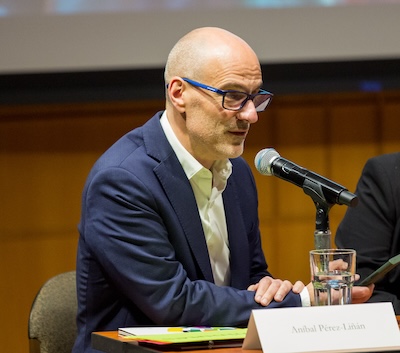
In this introductory episode, Kellogg Institute Director Aníbal Pérez-Liñán is interviewed by doctoral affiliates and Global Stage co-organizers Isabel Güiza-Gómez and Patrick McQuestion on his take-aways from the conference proceedings. Pérez-Liñán describes the motivation behind organizing this international conference, reflects on some key moments and debates, and describes plans for the next GDC in 2025.
Episode: 1
Hosts: Isabel Güiza-Gómez and Patrick McQuestion
Length: 11:40
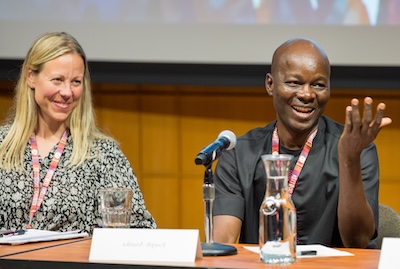 The Return of Military Coups in Africa: A Conversation with Joseph Asunka and Rachel Riedl
This episode of our special Global Democracy Series features a conversation between Rachel Riedl, professor of international studies at Cornell University, and Joseph Asunka, chief executive officer at Afrobarometer, along with Kellogg PhD Fellow Rasheed Ibrahim on the recent military coups in Sub-Saharan Africa. They analyze the potential long-term consequences of these coups, the role of the military in democratic governance, the decline in citizens' commitment to democracy, and the structural constraints that limit the military's effectiveness in addressing security challenges.
Episode: 2
Host: Rasheed Ibrahim
Length: 26:47
In this third episode of the Global Democracy Series, political scientists Laura Gamboa (University of Utah) and Kurt Weyland (University of Texas at Austin) reflect on the current state of democracy worldwide with Kellogg Institute Doctoral Affiliate Benjamin Francis. The speakers highlight some growing threats to democracy, such as the deleterious effects of economic crises, populism, and moral dilemmas to restraining anti-democratic behavior. They emphasize the importance of strategic decision-making to limit backsliding, as well as various institutional and extra-institutional strategies for protecting democracy.
Episode: 3
Length: 27:35
Host: Benjamin Francis
Interviewed by Kellogg PhD Fellow Bill Kakenmaster, political scientists Christina Wolbrecht and Dave Campbell discuss democracy and the political landscape of the United States. The 2024 US presidential election is a crucial moment for democracy, with growing trends of election denialism and the potential for undermining democratic norms. The conversation highlights the significance of inclusivity in politics, with a focus on the impact of women in leadership roles on adolescents' attitudes towards democracy. Speakers discuss the ongoing debate on who belongs and whose voice gets heard, as well as the importance of adapting to changing demographics.
Episode: 4
Length: 34:25
Host: Bill Kakenmaster
Interviewed by former Kellogg International Scholar Benjamín Rascón Grácia, political scientists María Isabel Puerta Riera (Valencia College) and Steven Lloyd Wilson (Brandeis University) discuss the manipulation of democratic processes through misinformation and disinformation in foreign and domestic contexts. They highlight the role of social media in spreading false information, the challenges of combating misinformation in the digital age, and the need for transparency, accountability, and critical thinking on social media platforms. They also emphasize the importance of government intervention to regulate social media and protect vulnerable groups from hate speech and discrimination.
Episode: 5
Length: 33:08
Host: Benjamín Rascón Grácia
Interviewed by Kellogg Doctoral Student Affiliate Patrick McQuestion, political scientists Michael Coppedge (University of Notre Dame) and Brigitte Seim discuss measuring democracy through the Varieties of Democracy, or V-Dem, Project. V-Dem aims to conceptualize and measure different forms of democracy, emphasizing the importance of disaggregating data to gain a nuanced understanding of democratic trends. Our guests discuss the project's approach to conceptualization, the role of practitioner-academic partnerships, and the importance of measuring and mitigating anti-democratic phenomena online.
Episode: 6
Length: 21:56
Host: Patrick McQuestion
Interviewed by Kellogg Doctoral Student Affiliate Patrick McQuestion, Helena Hofbauer Balmori of the Ford Foundation and James Long of the University of Washington discuss the significance of participation in democratic governance, with a focus on inclusive decision-making processes. Our guests highlight the role of inequality in the relationship between democracy and economic development and the weakening of democracy globally. They also discuss the rise of organized crime in Latin American politics and the need for further research on the deconstruction of judiciaries in countries like El Salvador and Guatemala. The conversation emphasizes the importance of context and the need for more research on understudied topics in the field of political science.
Episode: 7
Length: 23:04
Host: Patrick McQuestion
Interviewed by Kellogg Institute PhD Fellow Mayra Ortiz Ocaña, political scientists Wendy Hunter (University of Texas at Austin) and Benjamín Garcia Holgado (University of Delaware) discuss the resilience and challenges of democracy in Latin America, highlighting progress in reducing deforestation and military involvement while emphasizing the importance of maintaining democratic commitments and preventing violations. They also cover the growing military involvement in public security and governance, with a focus on the potential for actors to coordinate against populist leaders. Corruption, public insecurity, and inequality are identified as significant threats to democracy in the region.
Episode: 8
Length: 31:12
Host: Mayra Ortiz Ocaña


In the News
Learn what exciting developments are happening at the Kellogg Institute as part of the University's new Democracy Initiative.


