




Democracy Paradox Podcast
 About the Episode:
This episode of Democracy Paradox features Javier Corrales, professor of political science at Amherst College, in conversation about his recent research on democratic backsliding and intentional polarization. The discussion explores how leaders employ extremist policies and ideological rhetoric to consolidate executive power, drawing comparisons between Venezuela, the United States, and other global contexts. With an introductory conversation with Kellogg Visiting Fellow Henry Moncrieff, the episode offers a nuanced look at opposition strategies and the complex factors shaping democratic resilience and decline.
Show Notes:
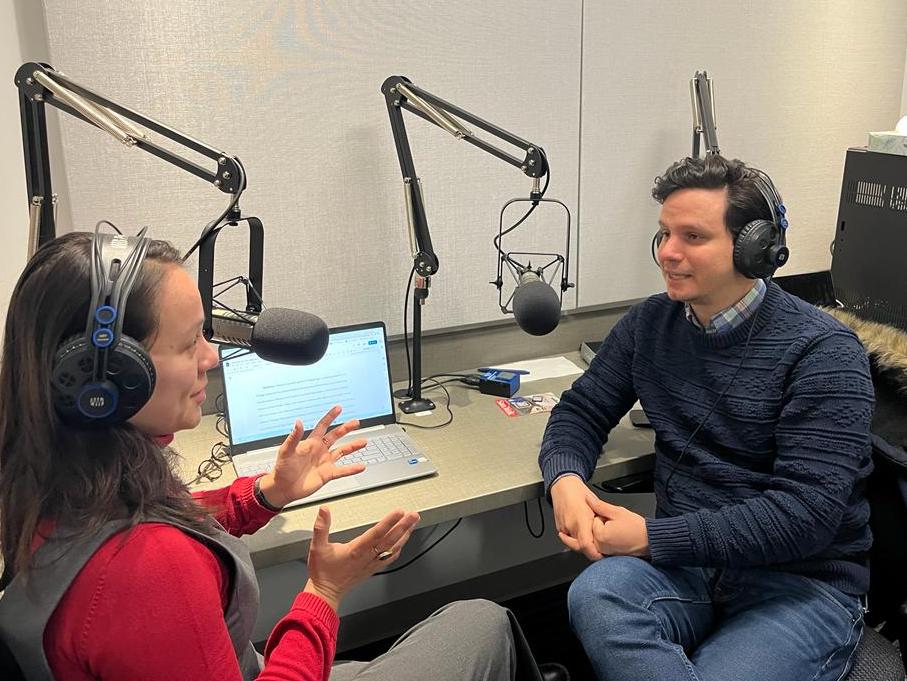
This Democracy Paradox episode begins with an introductory conversation featuring Henry Moncrieff, a postdoctoral visiting fellow at the Kellogg Institute, who shares insights about his own research on military responses to democratic backsliding in Latin America and highlights the significance of Javier Corrales’ work. Following this introduction, host Justin Kempf engages Javier Corrales, Dwight W. Morrow 1895 Professor of Political Science at Amherst College, in a detailed discussion on intentional polarization and democratic backsliding. Corrales explains how leaders strategically intensify polarization to consolidate executive power, destabilize opposition, and erode democratic institutions, using Venezuela and the United States as pivotal case studies.
The episode delves into the Venezuelan experience under Hugo Chávez, illustrating how a popular leader pursued radical policy changes and concentrated power while framing his actions as advancing participatory democracy. Corrales traces the rapid radicalization during Chávez’s administration and reflects on the opposition’s challenges in maintaining unity amidst escalating polarization and extra-institutional responses. The conversation also explores parallels in the United States under President Trump’s second term, highlighting how polarization functions as a deliberate strategy to strengthen autocratic tendencies.
Voters’ complex attitudes toward executive power grabs are examined, drawing on theories that partisanship often outweighs allegiance to democratic norms. Corrales discusses how ideological commitment enables leaders to push illiberal agendas with public support despite democratic erosion. The episode also addresses the difficulties opposition groups face in confronting polarization and proposes that unified campaigns and strategic moderation are essential to resisting democratic backsliding.
In closing, Corrales shares cautious optimism about Venezuela’s future, noting enduring opposition resilience and the possibility that governance failures within hybrid regimes may create openings for democratic recovery. The episode provides a rich, nuanced analysis of the mechanisms behind democratic decline and the critical importance of strategic responses to intentional polarization and authoritarian consolidation.
Links:
- Learn more about Javier Corrales.
- Read Corrales' coauthored Democratization article "Intentional polarization: How policy extremism and ideological overuse promote democratic backsliding"
- Learn more about Henry Moncrieff.
- Learn more about the Kellogg Institute.