





Democracy Paradox Podcast
 About the Episode:
This episode of The Democracy Paradox features political scientist Luis Schiumerini discussing his new book Incumbency Bias: Why Political Office is a Blessing and a Curse in Latin America, which reveals how holding office can either help or hurt politicians depending on whether institutions give them the capacity to meet the high expectations voters place on them. Drawing on cases from Brazil, Argentina, and Chile, Schiumerini explains how mismatches between responsibility and resources can produce either reelection advantages or disadvantages, showing that incumbency bias is often a natural result of democratic accountability rather than a sign of manipulation or backsliding.
Show Notes:
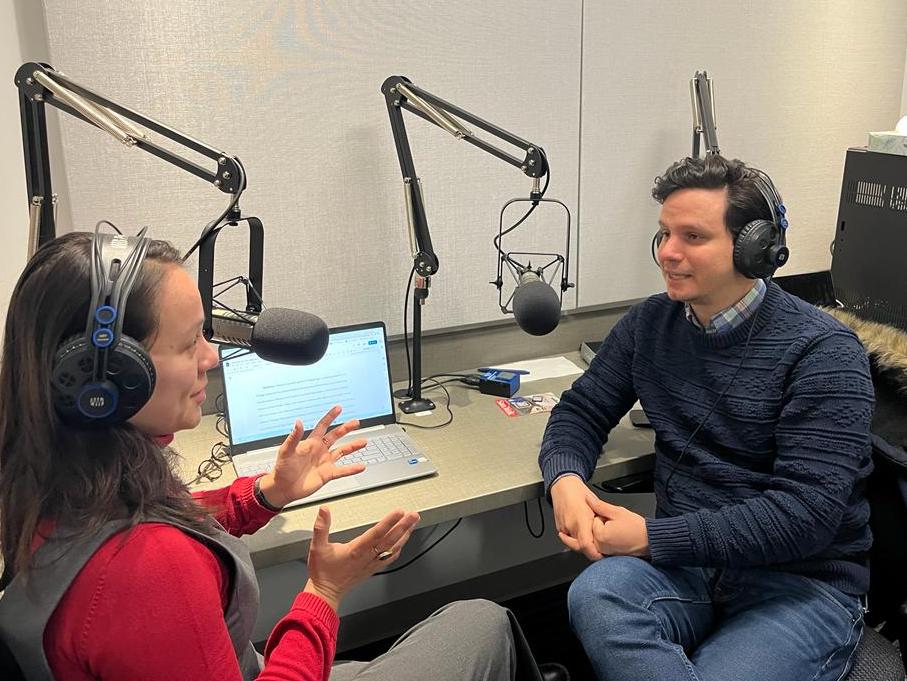
In this episode of The Democracy Paradox, host Justin Kempf speaks with Notre Dame political scientist Luis Schiumerini about his new book Incumbency Bias: Why Political Office is a Blessing and a Curse in Latin America. Schiumerini challenges common assumptions about incumbents, demonstrating that holding office can create systematic advantages – or disadvantages – depending on the institutional context. Before the conversation begins, Kellogg Doctoral Student Affiliate Tomás Gianibelli joins Kempf to share his experience working with Schiumerini and to explain why this research reshapes how scholars think about democracy.
Schiumerini argues that incumbency disadvantage emerges when institutions create high public expectations for officeholders but give them limited capacity to deliver on those expectations. Using cases from Brazil, Argentina, and Chile, he shows how mismatches between responsibility and resources can penalize incumbents at the ballot box. For example, Brazilian mayors are widely seen as responsible for vital services such as health and education, yet strict fiscal rules and a dependence on federal transfers leave them unable to meet voter demands – producing systematic reelection disadvantages.
At the same time, the conversation reveals that incumbency advantage should not automatically be viewed as a threat to democracy. Schiumerini contends that advantage or disadvantage frequently results from electoral accountability rather than abuse of power. Voters reward or punish leaders based on observable public goods and performance, meaning that incumbency bias – rather than being inherently undemocratic – can be a natural product of healthy democratic processes. However, he cautions that some regimes tilt the playing field through coercive or clientelist practices, creating undemocratic “hyper-incumbency” advantages.
The episode also connects incumbency research to current global trends. Kempf and Schiumerini discuss declining reelection rates among presidents in democracies from Argentina to the United States, attributing this development to rising polarization and diminishing governmental capacity to improve citizens’ material welfare. The conversation closes by addressing debates over term limits, showing how their effects depend on whether they promote accountability or prevent political monopolies. Together, these insights reveal how studying incumbency deepens our understanding of democratic performance, backsliding, and the institutional conditions that shape voter expectations.
Links:
- Learn more about Luis Schiumerini.
- Learn more about his book Incumbency Bias: Why Political Office is a Blessing and a Curse in Latin America.
- Learn more about Tomás Gianibelli.
- Learn more about the Kellogg Institute.