About

Professor of Political Science Debra Javeline has been a Kellogg faculty fellow since  2005. She divides her time between the study of Russia and the study of global environmental problems, especially climate change, with research interests in mass political behavior, Russian politics, sustainability, environmental politics, and climate change. 

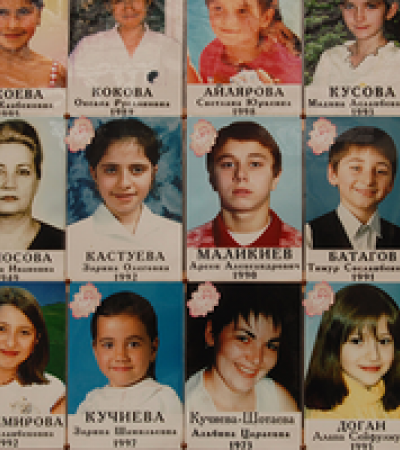
Her most recent book is After Violence: Russia’s Beslan School Massacre and the Peace that Followed (Oxford University Press, 2023). Javeline also authored Protest and the Politics of Blame: The Russian Response to Unpaid Wages (University of Michigan Press, 2003) and numerous articles in journals such as Perspectives on Politics, The American Political Science Review, Comparative Political Studies, Political Research Quarterly, and Climatic Change, among others.

Her current book project is “Unadapted: A Portrait of Unchanged Humans on a Changed Planet.” With Notre Dame engineers and funding from the National Science Foundation and Notre Dame’s Environmental Change Initiative, she continues to study coastal homeowners in a changing climate and the factors that influence homeowner risk reduction in anticipation of hurricanes and other disasters. She and Sarah Lindemann-Komarova updated their 2010 work in Journal of International Affairs with an article on “Financing Russian Civil Society” (Europe-Asia Studies, 2019). She contributed a chapter on “Climate Change” to the 10th edition of the widely used textbook, Developments in Russian Politics (Bloomsbury, 2024), and with Graeme Robertson and Robert Orttung, she co-directs the PONARS Task Force on Russia in a Changing Climate.

Javeline has conducted survey research in the former Soviet Union for the US Information Agency (now State Department) and the US Agency for International Development. She has held fellowships from Fulbright-Hays, Mellon, ACTR, FLAS, Harvard University's Davis Center for Russian Studies, the University of Colorado's Institute of Behavioral Science, the Robert Wood Johnson Foundation, the National Science Foundation, and the National Council for Eurasian and East European Research. In 2011-12, she was supported by a Mellon New Directions fellowship to study ecology and environmental law, and in 2020, she was supported by Notre Dame’s Institute for Advanced Study.

Thematic Interests

Comparative politics; mass political behavior; survey research; the politics of post-Soviet and other post-communist regimes; the politics of adapting to climate change

Research Sub-Discipline
Countries
Regions

Selected Publications

Books

Journal Articles