The Kellogg Institute for International Studies serves as a central hub at the University of Notre Dame for research, teaching, and engagement on global democracy. Over four decades, it has grown into a multidisciplinary institute supporting faculty, students, and global scholars.
Kellogg approaches democracy not only as a system of governance, but as an evolving and contested process shaped by institutions, culture, history, and global interdependence. Across its work, the institute integrates empirical research with normative inquiry, examining how democratic societies pursue justice, inclusion, and human flourishing.
The institute plays multiple roles across the university: advancing comparative research on democracy, anchoring the study of Latin America and Africa, funding faculty and student research, and providing hands-on learning opportunities. Its evolution reflects both institutional priorities and global challenges in democracy.
 The origins of the Kellogg Institute trace back to the mid-1970s, when Rev. Edmund “Ned” Joyce, CSC, then executive vice president of the University of Notre Dame, began cultivating a relationship with Helen Kellogg about the possibility of funding an international institute.
Helen Kellogg, the daughter-in-law of W. K. Kellogg, was connected to a philanthropic foundation established after the death of her husband, John Kellogg. Although her will expressed only a nonbinding wish that funds be given to Notre Dame, university leaders saw an opportunity.
In 1979, Joyce and Rev. Theodore Hesburgh, CSC, met with the foundation’s board to present their vision. At the time, most of the foundation’s assets had already been committed – largely to Northwestern University – and expectations were modest.
After a lengthy deliberation, however, the board made a decisive commitment: a $10 million gift to Notre Dame, enabling the creation of the Kellogg Institute. The moment proved transformative, helping launch an institute that would become central to the university’s global mission.
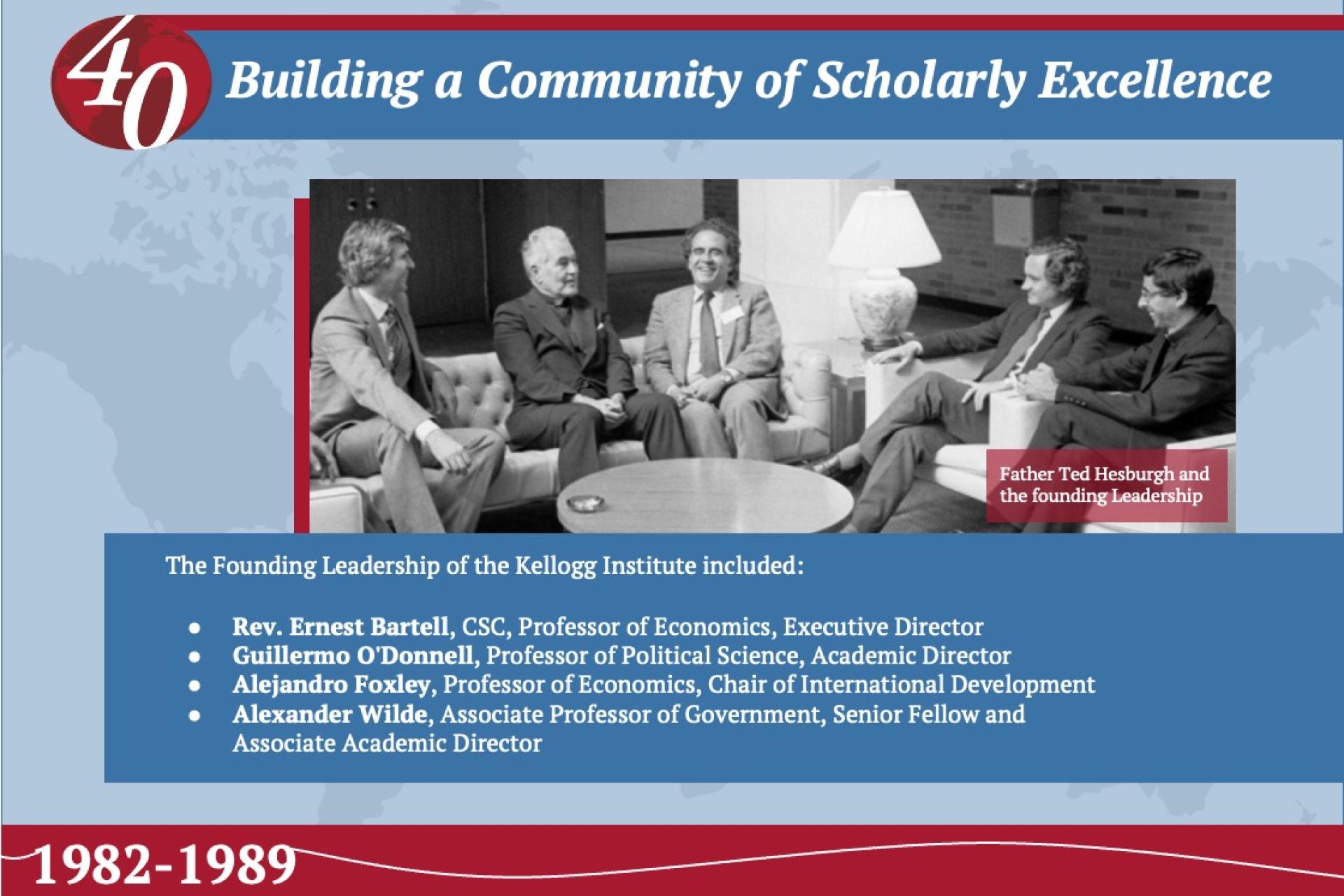
 The Kellogg Institute was formally established in 1983 with that founding endowment. Under the leadership of Guillermo O’Donnell and Rev. Ernest Bartell, CSC, the institute was designed to advance understanding of democracy, development, and the human values that connect them.
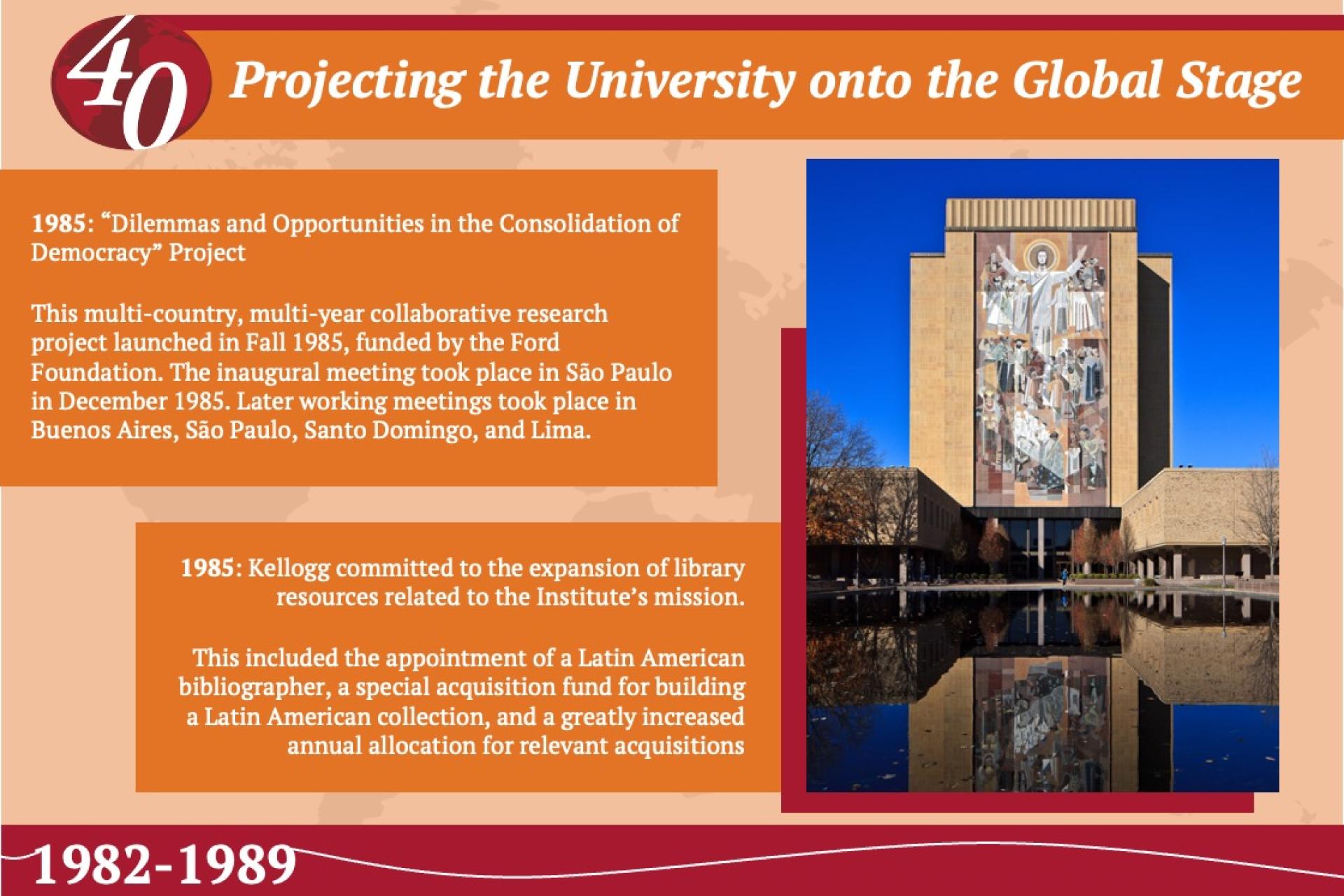
From the outset, Kellogg treated democracy as both a political system and a broader collaborative project. Early research focused on Latin America, reflecting faculty expertise and institutional ties, while also addressing broader comparative questions about democratization, state capacity, and social change.
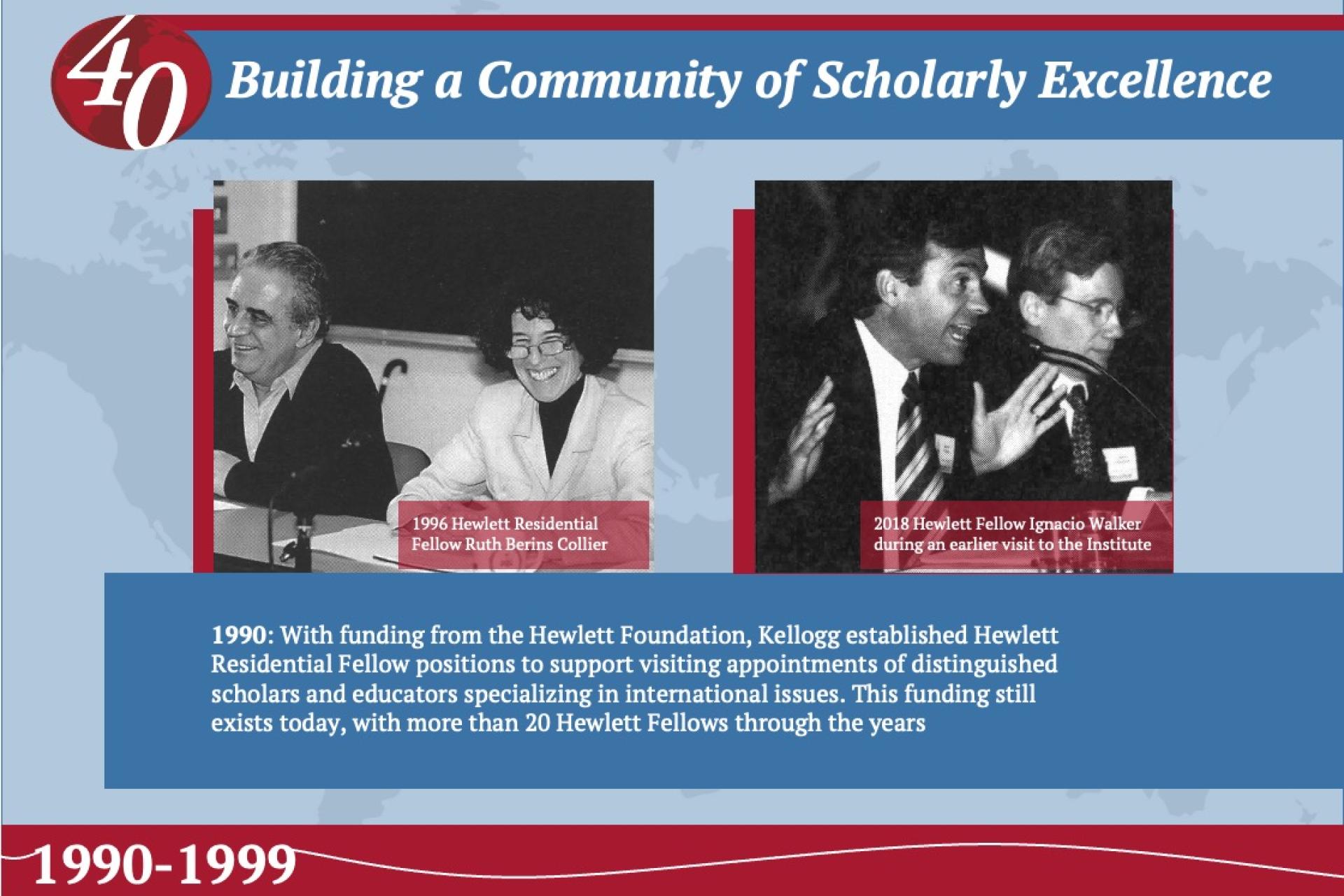
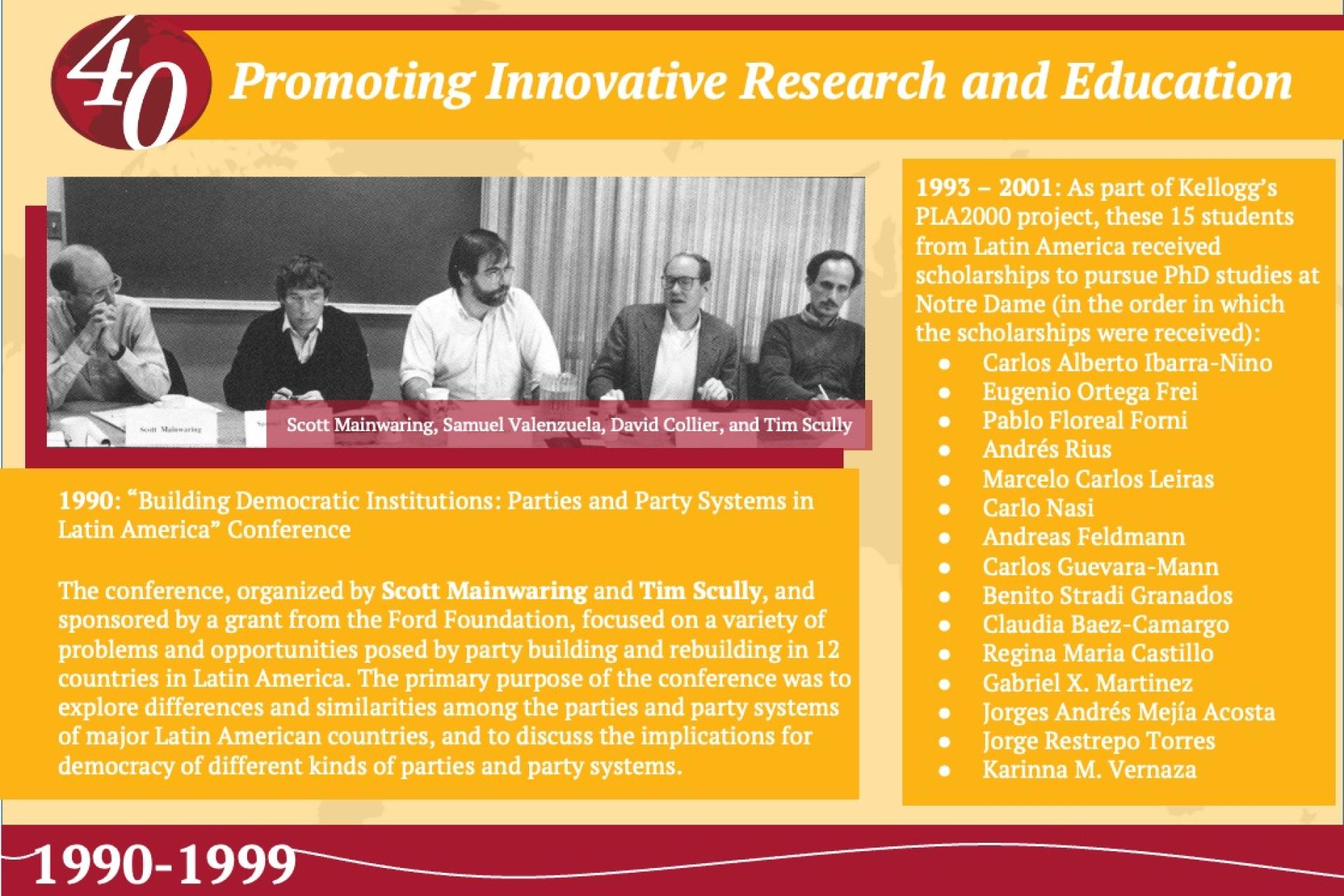
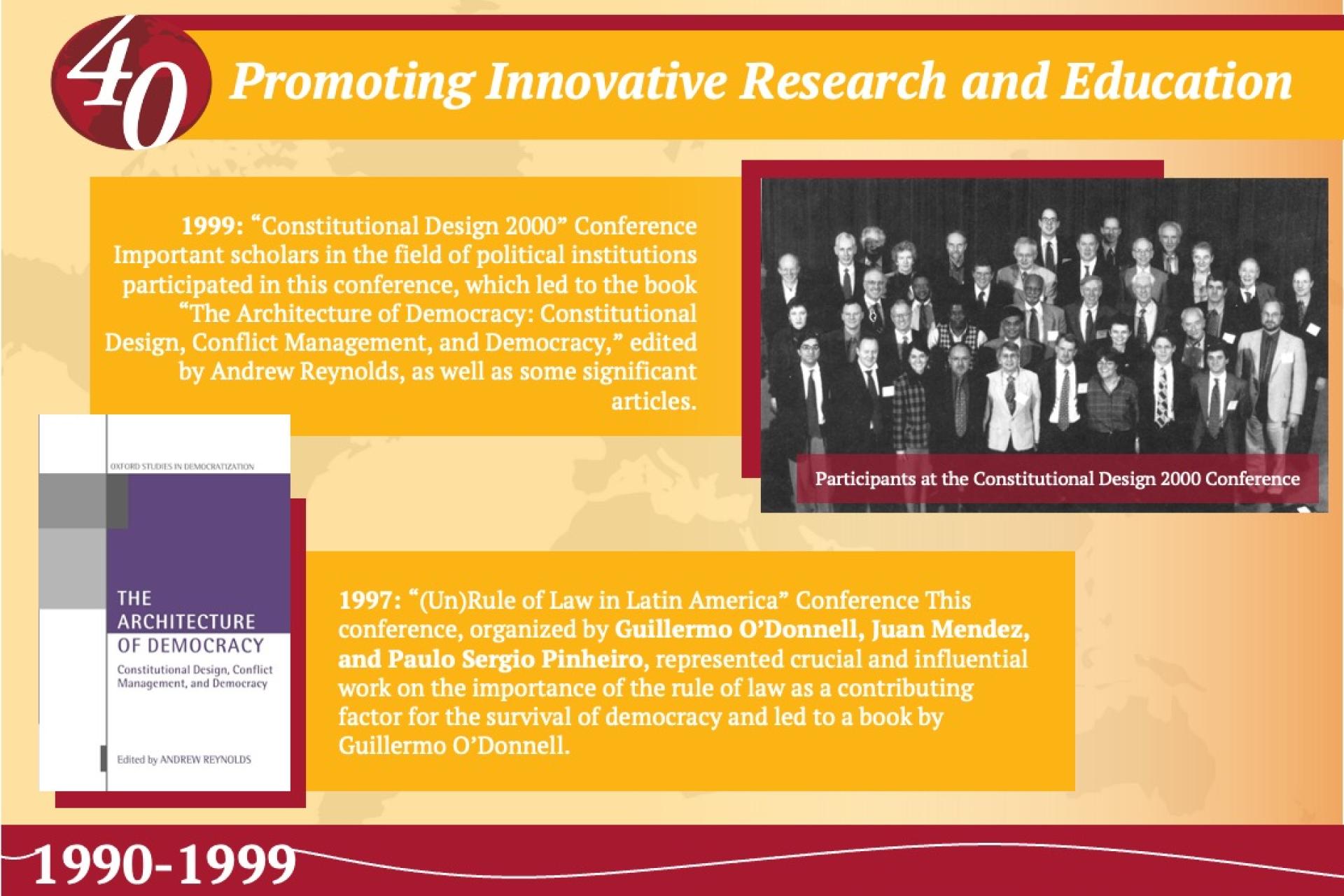
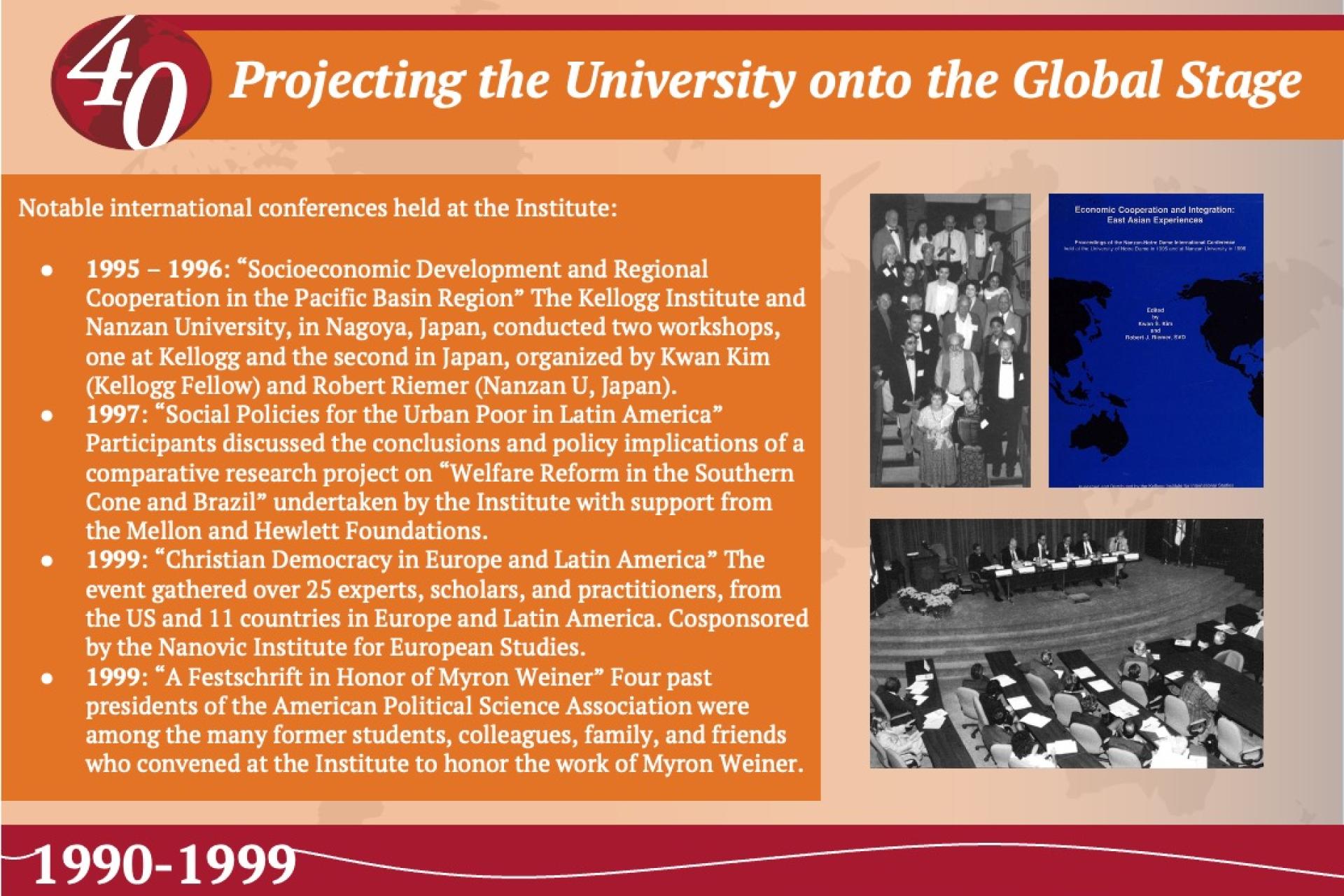
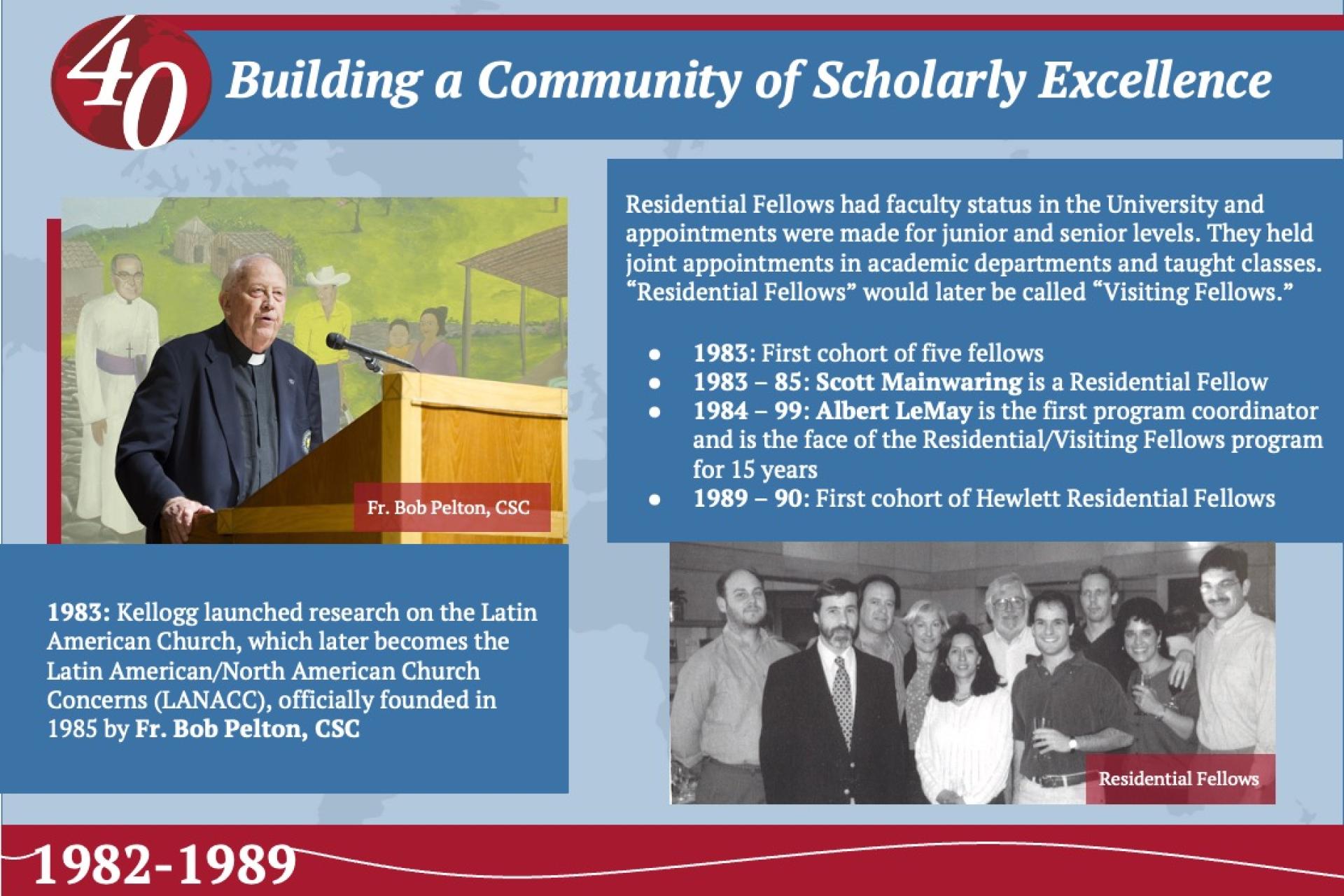
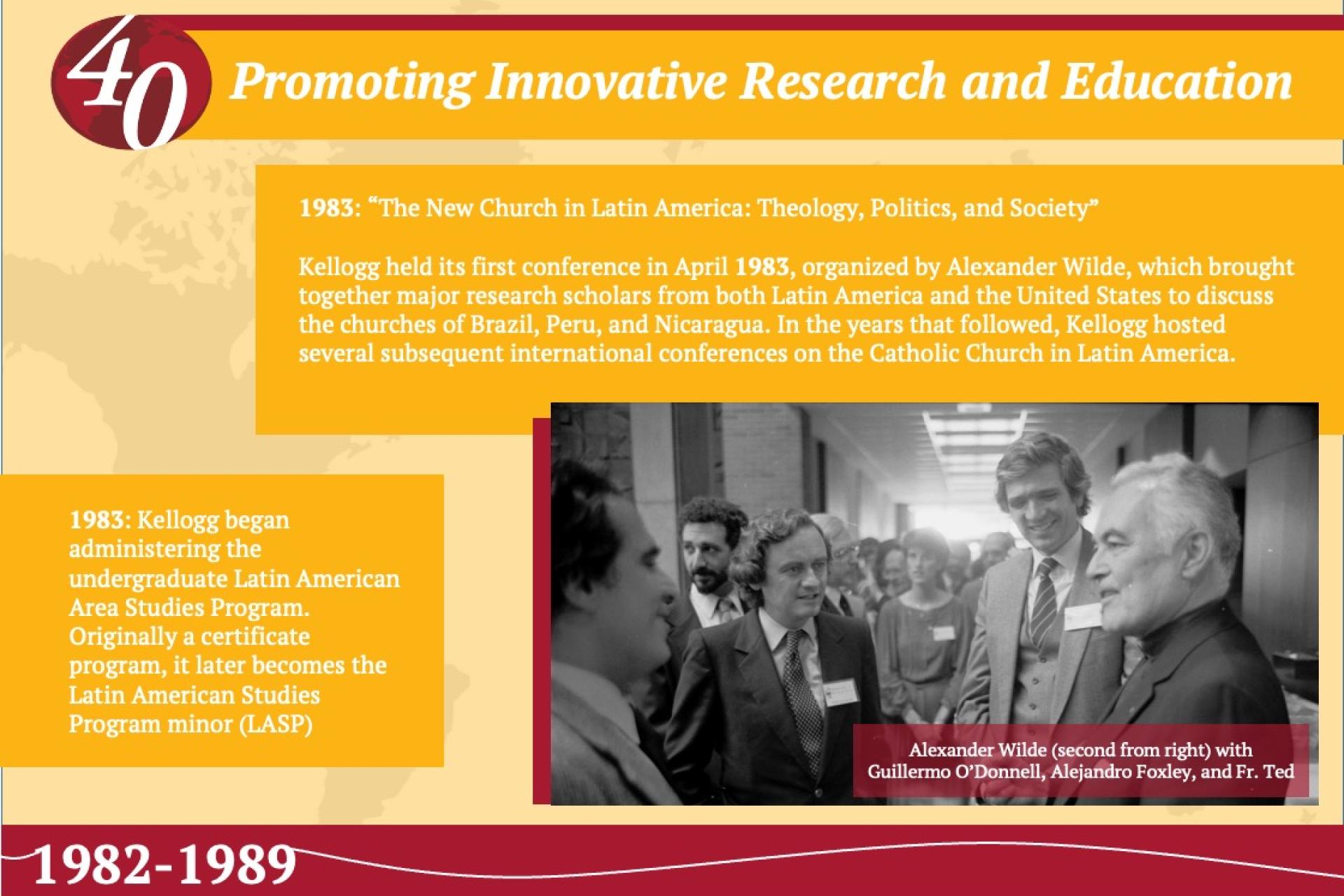
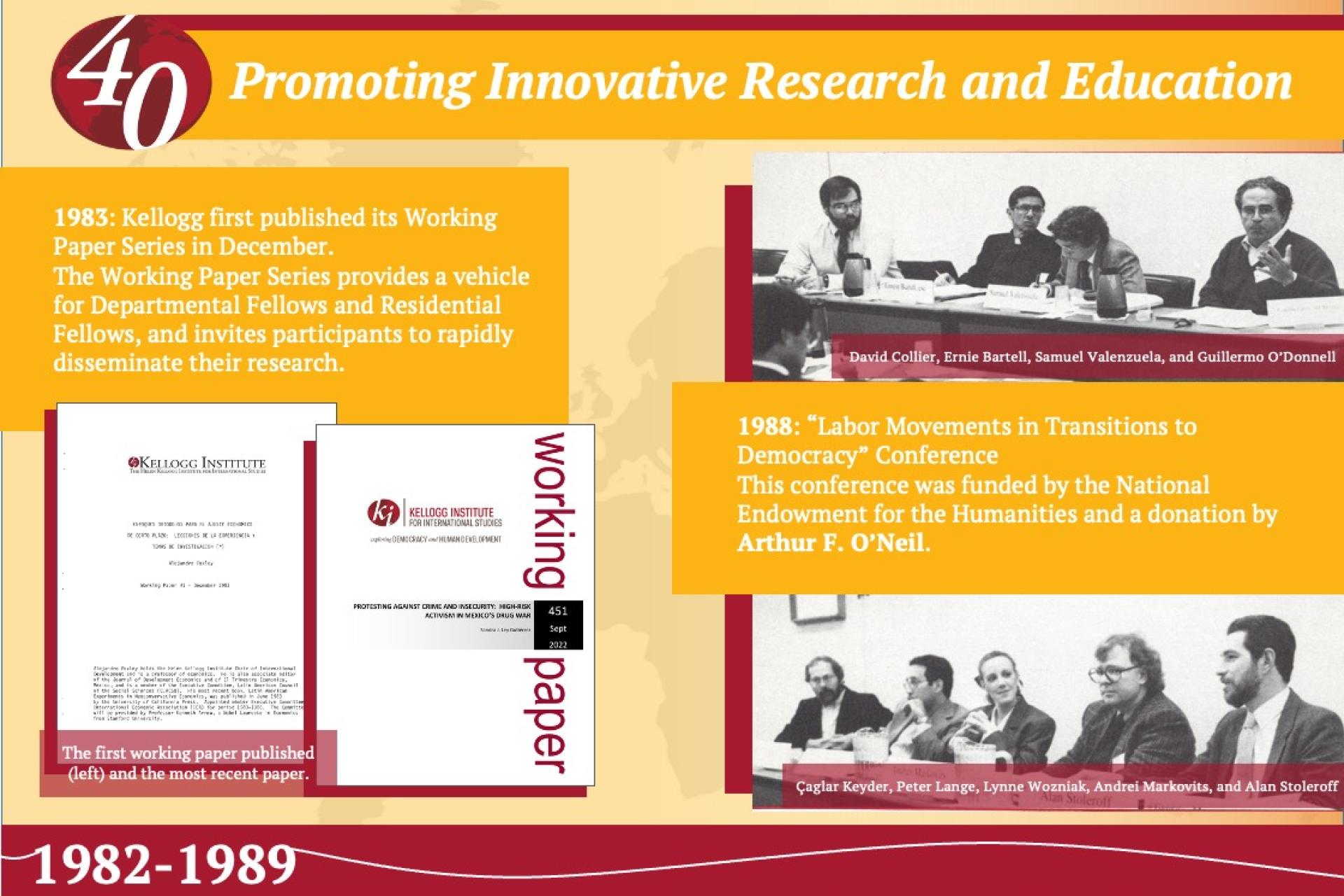
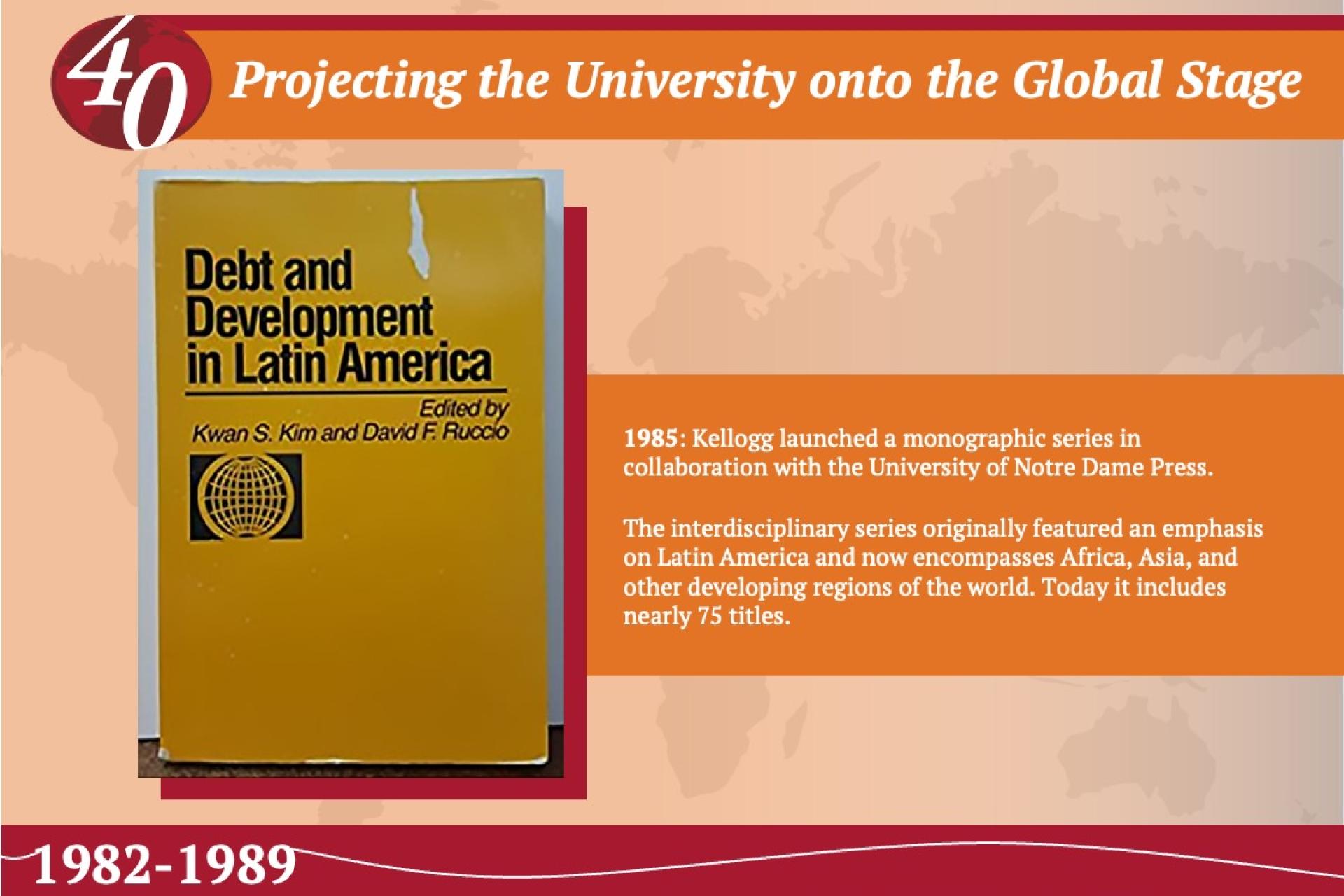
The institute emphasized interdisciplinary collaboration from its earliest days, launching initiatives such as residential fellowships, an influential Working Paper Series, and major international conferences on democracy, development, and civil society.
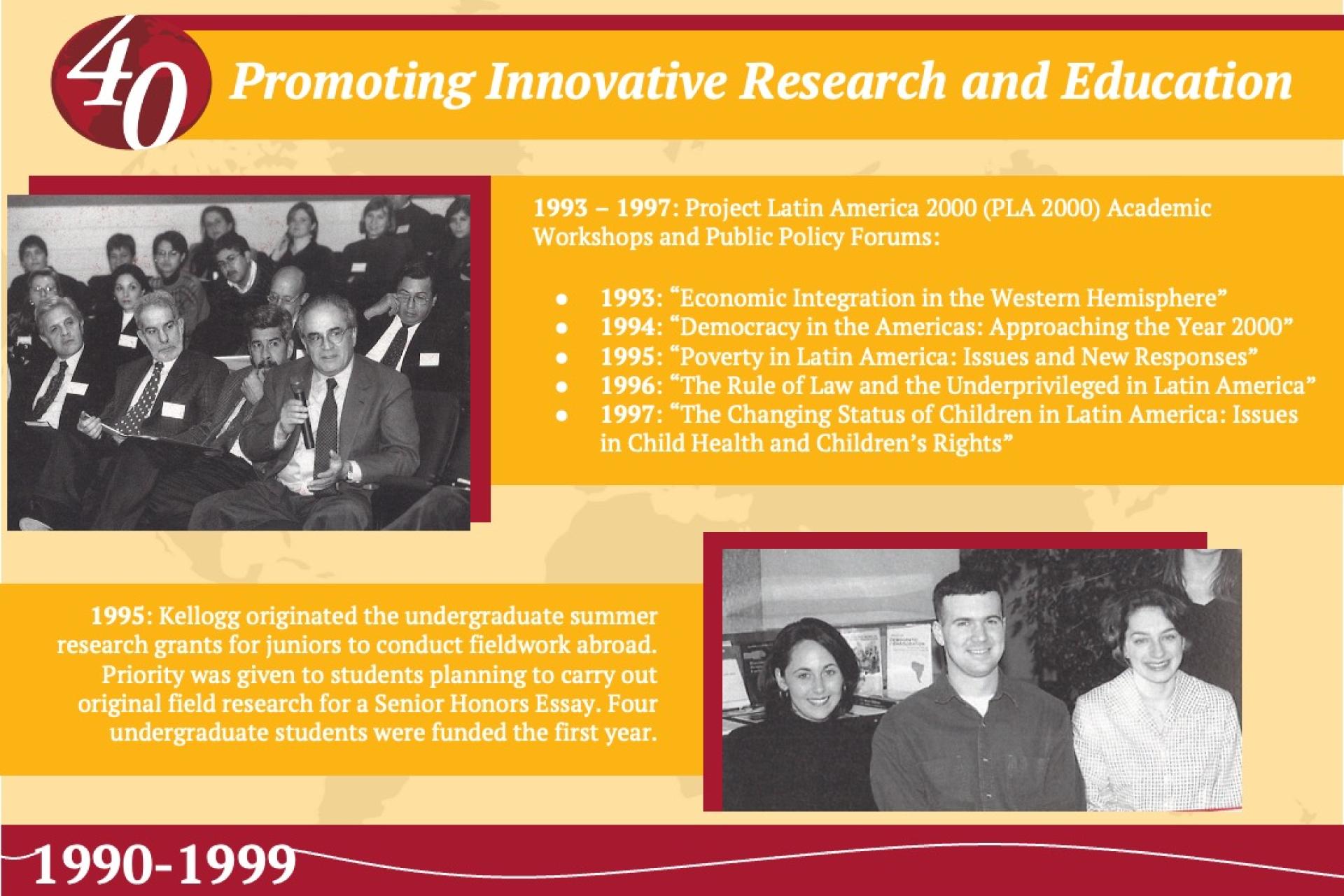
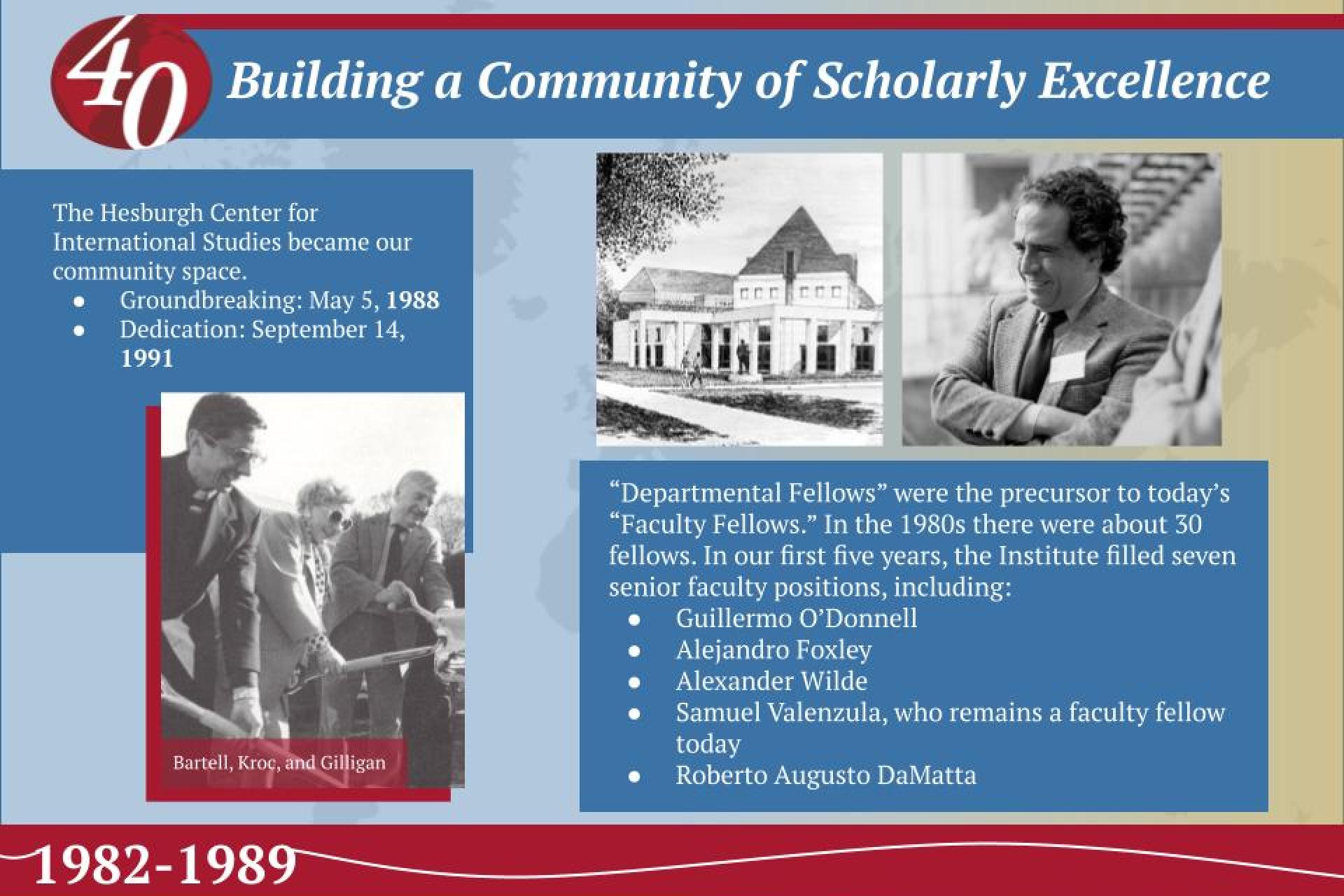
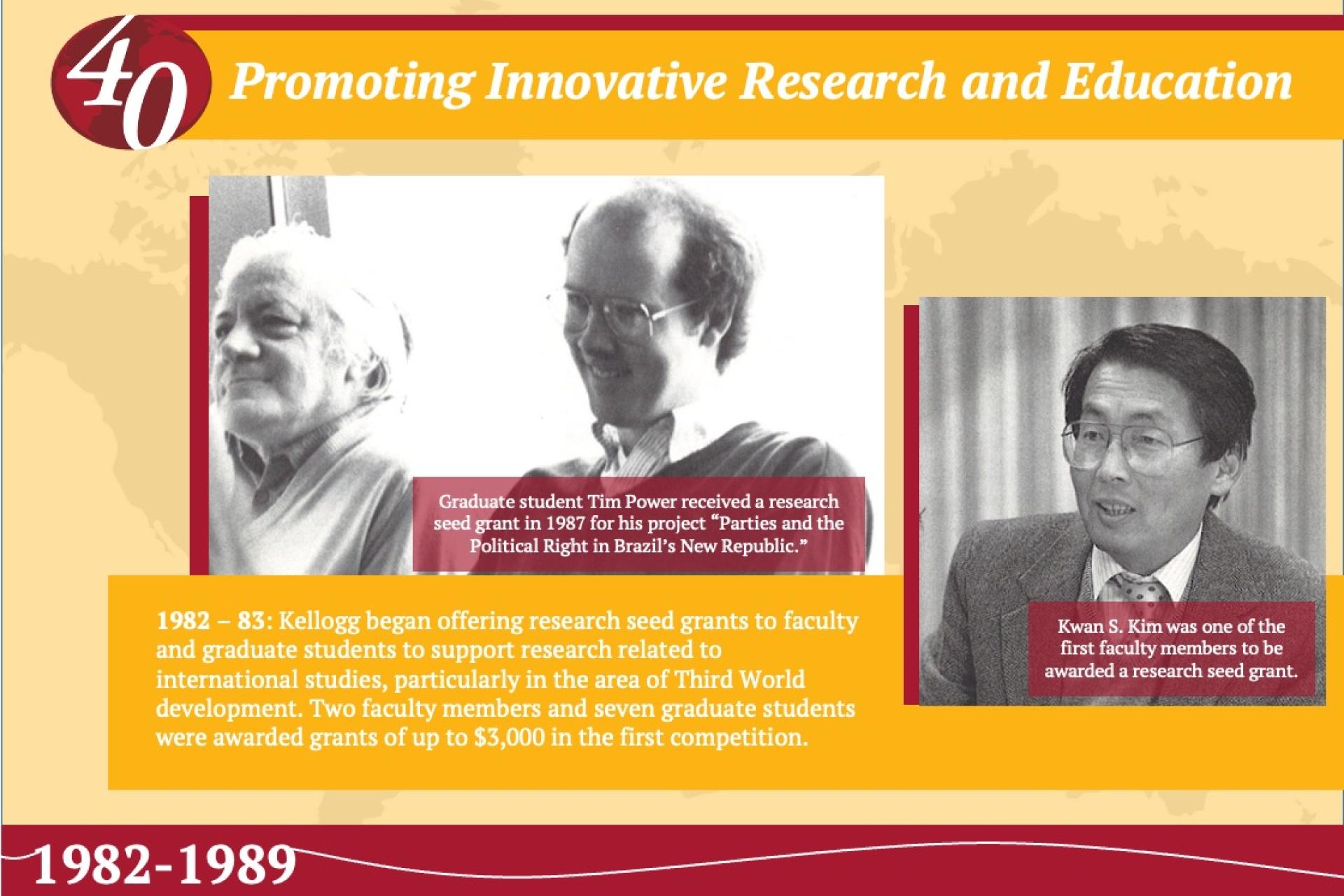
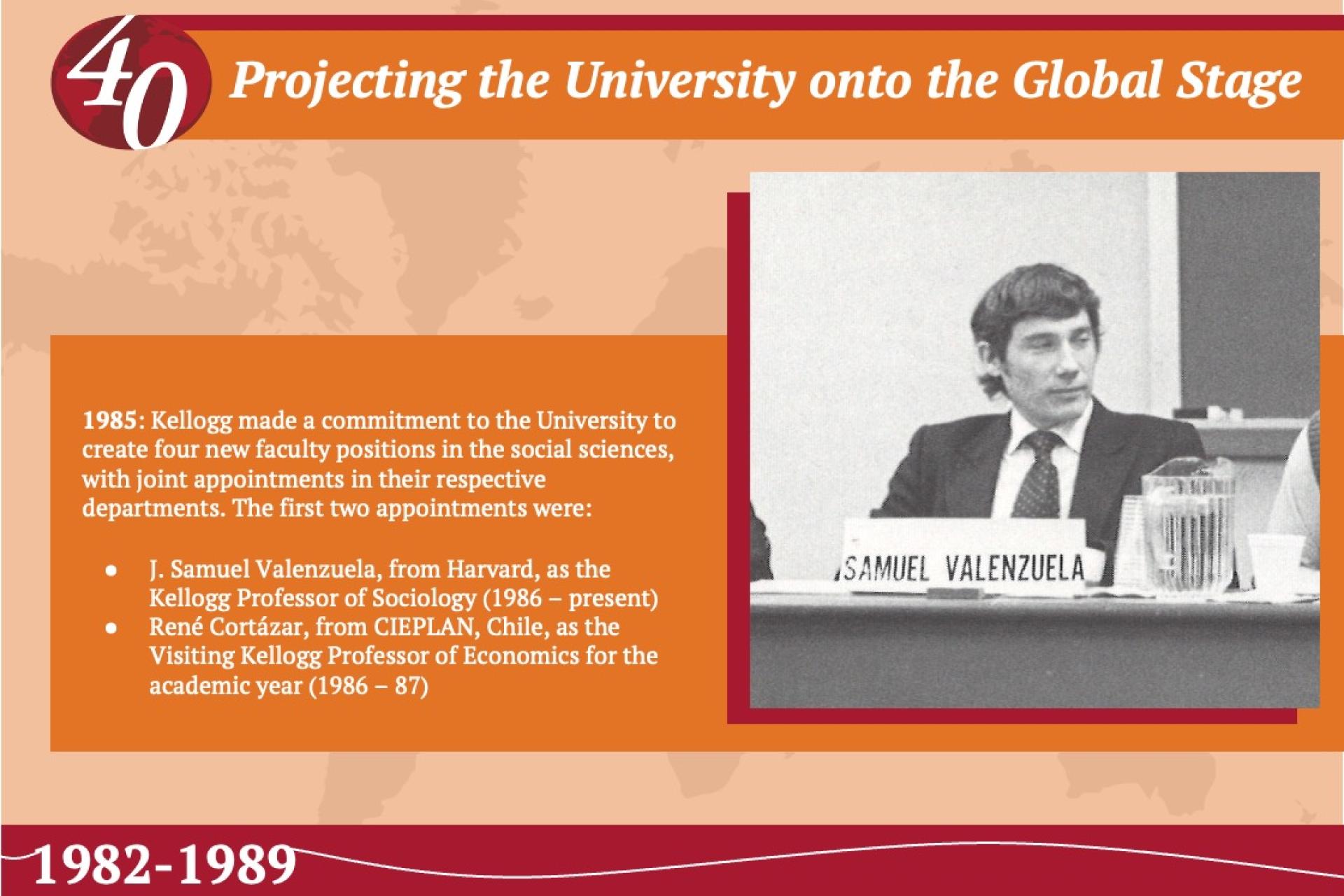
Kellogg also began investing in people – supporting faculty recruitment across departments, offering seed grants for research, and creating opportunities for undergraduate fieldwork abroad. In 1991, the institute moved into the Hesburgh Center for International Studies, establishing a shared home with the Kroc Institute for International Peace Studies.
 Under the leadership of Scott Mainwaring, Kellogg expanded its reach and deepened its impact across campus, particularly in the comparative study of democracy.
The institute introduced Working Groups to foster sustained collaboration among faculty and graduate students and broadened support for student training at all levels. These efforts strengthened Kellogg’s role as a hub for interdisciplinary research on democratic institutions, political behavior, and development.
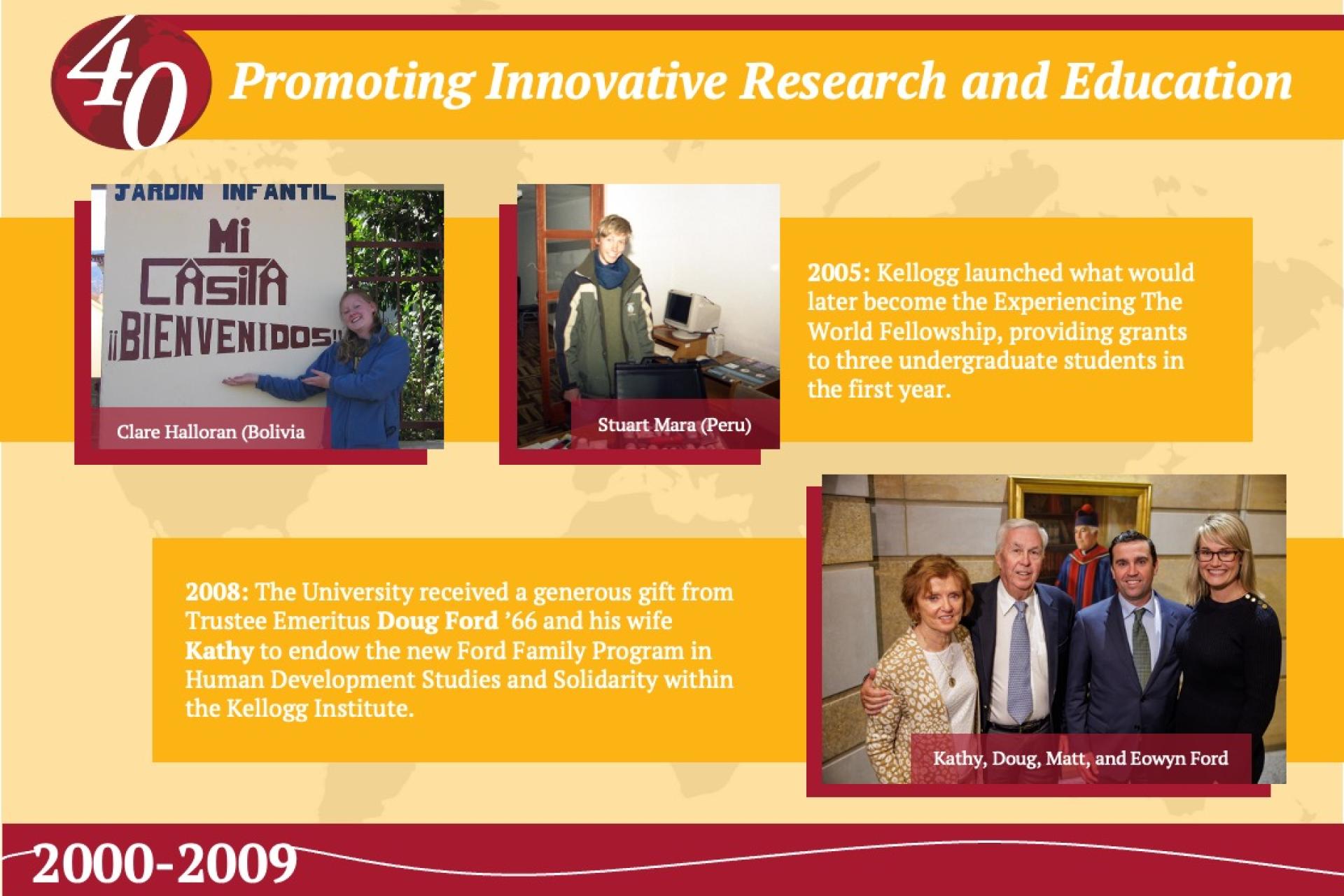
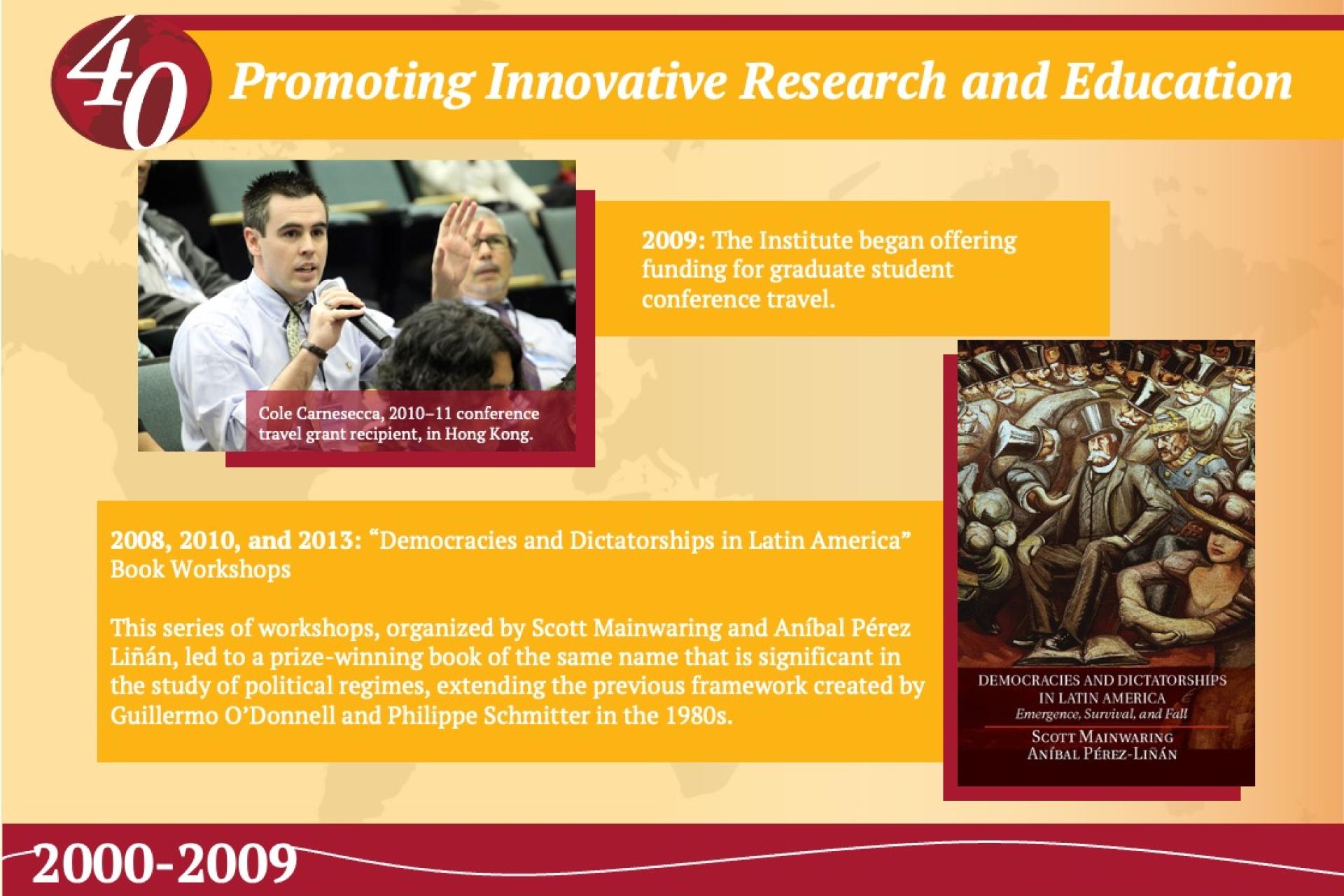
Experiential learning became a hallmark of Kellogg’s educational mission, with new international internships and research fellowships for undergraduates. Support for graduate students also grew, including funding for conference travel and expanded research opportunities.
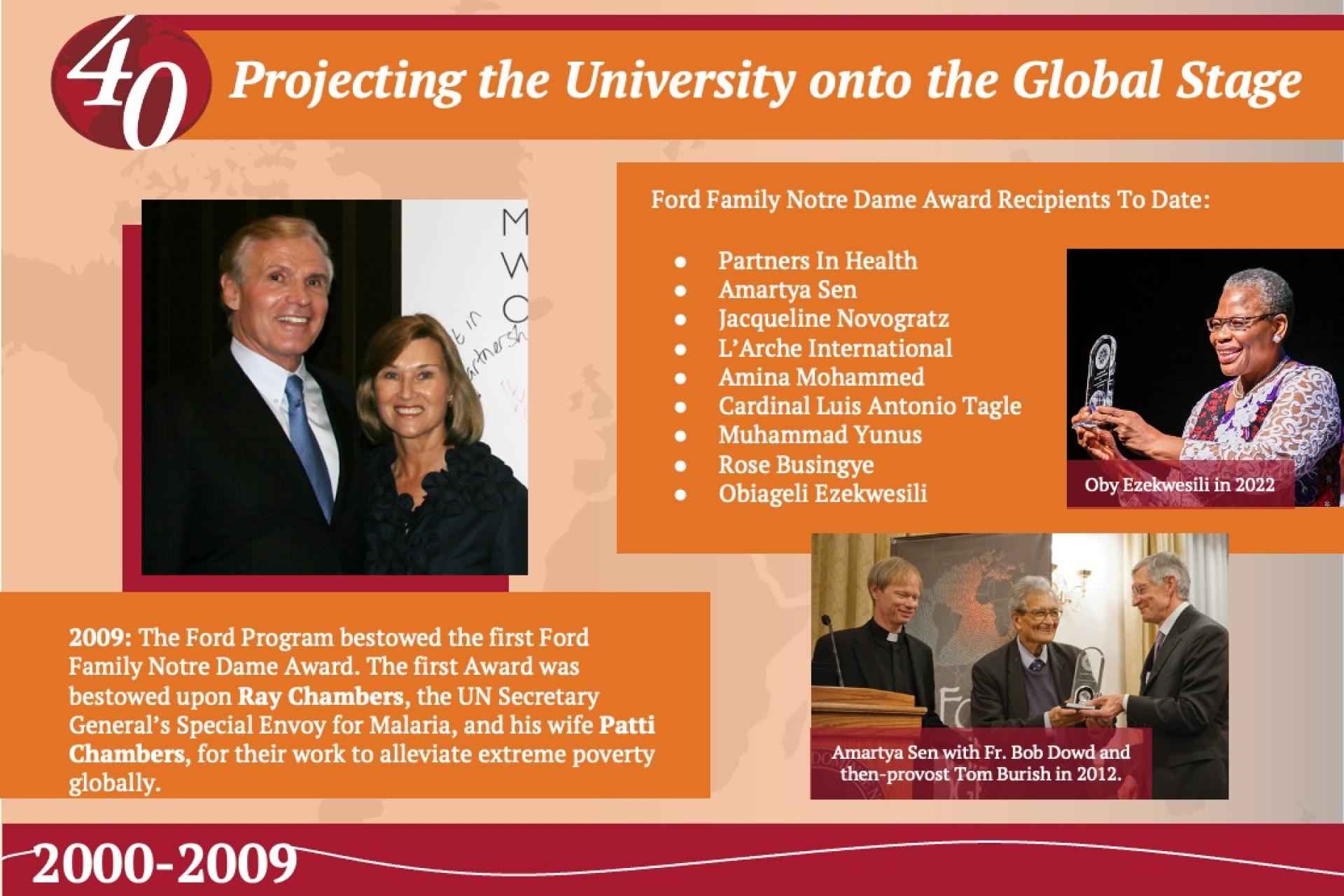
A major milestone was the creation of the Ford Program in Human Development Studies and Solidarity in 2008, founded by Rev. Robert Dowd, CSC. Grounded in Catholic Social Teaching, the program promotes interdisciplinary, non-extractive research – particularly in Africa – focused on advancing human dignity and sustainable development.
Following a strategic planning process in 2011, Kellogg clarified its intellectual agenda around two core, interconnected themes: democracy and human development.
 With Paolo Carozza’s appointment as director in 2012, Kellogg strengthened its multidisciplinary approach and expanded collaborations across the university, including with law, business, engineering, and the humanities.
The institute became part of the Keough School of Global Affairs in 2014, further integrating its work into Notre Dame’s global mission. During this period, Kellogg deepened its commitment to studying democracy in comparative and global perspective, while expanding research on development, ethics, and human well-being.
Kellogg launched new initiatives to support cutting-edge research and training, including the New Frontiers in Economic Development series, Research Clusters, and Policy and Practice Research Labs – creating new spaces to examine how democratic governance, public policy, and development intersect in practice.
Graduate student engagement also expanded significantly, with the creation of the Doctoral Student Affiliate Program and increased support for students in the Keough School’s Master of Global Affairs program.
 Under current director Aníbal Pérez-Liñán, appointed in 2022, the institute continues to build on its legacy while adapting to new global challenges. A Notre Dame alumnus and former Kellogg fellow, Pérez-Liñán reflects the institute’s long-standing commitment to mentorship and academic continuity.
Today, Kellogg has sharpened its focus on the study of global democracy – approaching democracy not only as a system of governance, but as an evolving and contested collaborative project grounded in pluralism, equality, solidarity, dignity, and the common good. The institute brings together scholars across disciplines to examine democracy as both an empirical reality and a normative horizon, shaped by institutions, culture, history, and global interdependence.
This renewed emphasis is reflected in three interconnected areas of research: institutions and governance; justice and inclusion; and democracy and human flourishing. Across these areas, Kellogg integrates diverse methodologies to better understand how democracies function, how they confront inequality and exclusion, and how they can support more just and flourishing societies.
Kellogg also plays a leading role in the University of Notre Dame’s Democracy Initiative, part of the 2033 Strategic Framework. This includes investments in faculty, postdoctoral scholars, and doctoral students, as well as the development of a new Global Democracy Conference to foster dialogue among scholars and practitioners worldwide.
From its origins as a small institute with ten faculty fellows, Kellogg has grown into a globally recognized center with more than 130 affiliated faculty and a robust annual research portfolio.
Today, it stands among the leading academic institutions dedicated to understanding and advancing global democracy – continuing to shape scholarship, inform policy, and train the next generation of global leaders.
40th Anniversary Timeline