




Democracy Paradox Podcast
 About the Episode:
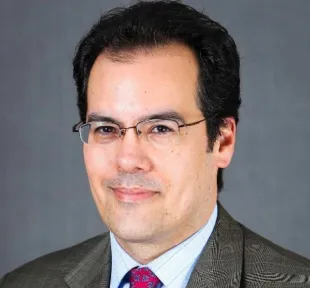
Christopher Walker joins the Democracy Paradox to revisit the concept of “sharp power” and explain how authoritarian regimes like China and Russia use non-military tools to manipulate, censor, and shape discourse within democratic societies. The conversation explores how these tactics have evolved, whether democracies can defend themselves without compromising their values, and what this reveals about the future of democracy itself.
Show Notes:
Christopher Walker, a leading expert on authoritarian influence, returns to the origins of the concept of "sharp power," a term he helped develop to distinguish coercive and manipulative forms of influence from Joseph Nye’s idea of soft power. While soft power relies on attraction and persuasion, Walker explains that sharp power instead works by penetrating democratic institutions, restricting debate, and shaping narratives in ways that undermine openness. The conversation situates this concept within a broader shift in global politics, where expectations of democratic expansion after the Cold War have given way to a more contested and authoritarian-influenced world.
The episode explores how sharp power operates in practice, including through institutions like Confucius Institutes, media influence, and educational partnerships. Walker highlights how these initiatives often appear benign or beneficial on the surface, but in reality can impose limits on discussion, censor sensitive topics, and privilege state-approved narratives. These efforts exploit the openness of democratic societies, leveraging transparency and institutional access in ways that would not be tolerated within authoritarian systems themselves.
A central theme of the discussion is whether democracies can effectively respond to sharp power without abandoning their own core principles. Walker argues that the goal is not to mimic authoritarian tactics, but to strengthen democratic resilience through transparency, investment in independent media, and international cooperation. He emphasizes that unity among democracies and renewed commitment to non-military forms of influence—what might still be called soft power—are essential to countering sustained efforts by authoritarian regimes to divide and weaken them.
Ultimately, the conversation reflects on what the rise of sharp power reveals about democracy itself. Walker underscores that democracy is not self-sustaining; it requires vigilance, institutional renewal, and active defense against external and internal pressures. At a time when authoritarian regimes are investing heavily in shaping global narratives, the future of democracy may depend on whether free societies can compete effectively while remaining true to their foundational values of openness, pluralism, and freedom of expression.
Links:
- Learn more about Christopher Walker.
- Learn more about the Kellogg Institute.
- Register for the 2026 Global Democracy Conference at the University of Notre Dame.