



Global Stage Podcast
 About the Episode:
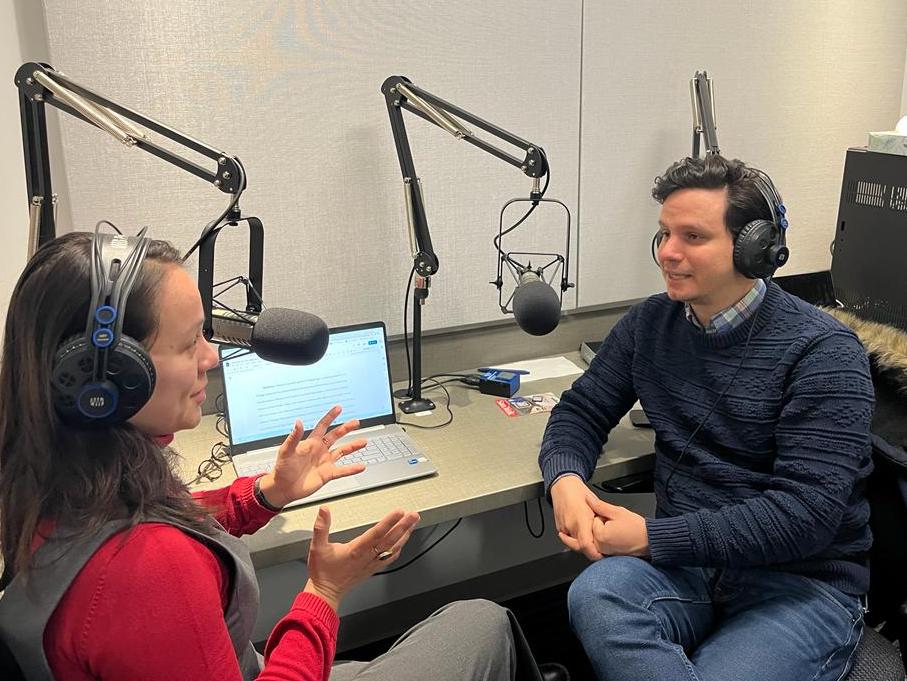
In this episode, S. Y. Quraishi, Former Chief Election Commissioner of India, joins Kellogg Doctoral Affiliate Alejandro Gonzalez, PhD student in Political Science, for a conversation on the vital role of Electoral Management Bodies (EMBs) in guaranteeing free and fair elections. He reflects on the logistical, cultural, ethnic, and religious diversity challenges of administering elections in the world’s largest democracy. Drawing on his unique experience, Quraishi shares insights on the pressures faced by election authorities, the resilience of India’s electoral system, and key recommendations for strengthening electoral integrity worldwide.
Show Notes:
Welcome to Global Stage, a podcast produced by the Kellogg Institute at the University of Notre Dame. In this episode, Kellogg Doctoral Affiliate Alejandro González sits down with S.Y. Quraishi, former Chief Election Commissioner of India and a leading expert on electoral systems. Quraishi, who spoke at the Kellogg Institute’s 2025 Global Democracy Conference, currently serves on the International Election Advisory Council and is an honorary professor at the University of Delhi. Together, they delve into the complexities of organizing elections in the world’s largest democracy and what the rest of the world can learn from India’s experience.
González begins by asking what it takes to organize elections in the world’s largest democracy. Quraishi explains the immense task of cataloguing over one billion voters, issuing voter ID cards, and managing more than one million polling stations. Despite political pressures faced by election commissioners, many of which are unseen by the public, Quraishi highlights that extremist organizations pose the greatest challenges today. Security and logistics are critical to addressing these threats, and they use a smart mix of low and high-tech solutions to safeguard the voting process. Elections in India are rarely contested, even at the local level, with candidates respecting recount outcomes.
The conversation turns to innovations India offers globally. Quraishi established an election management training institute in New Delhi, welcoming officials from 143 countries. This institution promotes inclusive electoral management, ensuring no voter is left behind and that political equality is maintained. India’s democratic resilience is supported by its model code of conduct, which addresses nepotism, corruption, and other issues. Though concerns about corruption exist in other countries, Quraishi emphasizes the autonomy and integrity of India’s election commissioners, appointed through a bipartisan process involving leaders from multiple parties and the prime minister. He acknowledges the system is not perfect but is continually improving.
Finally, González asks how to prevent democracy’s erosion in India. Quraishi stresses the need for honesty and neutrality in electoral roles. He points to the India International Institute of Democracy and Election Management (IIIDEM), which he founded to support democratic development worldwide. He emphasizes the global responsibility to share India’s democratic insights.
González begins by asking what it takes to organize elections in the world’s largest democracy. Quraishi explains the immense task of cataloguing over one billion voters, issuing voter ID cards, and managing more than one million polling stations. Despite political pressures faced by election commissioners, many of which are unseen by the public, Quraishi highlights that extremist organizations pose the greatest challenges today. Security and logistics are critical to addressing these threats, and they use a smart mix of low and high-tech solutions to safeguard the voting process. Elections in India are rarely contested, even at the local level, with candidates respecting recount outcomes.
The conversation turns to innovations India offers globally. Quraishi established an election management training institute in New Delhi, welcoming officials from 143 countries. This institution promotes inclusive electoral management, ensuring no voter is left behind and that political equality is maintained. India’s democratic resilience is supported by its model code of conduct, which addresses nepotism, corruption, and other issues. Though concerns about corruption exist in other countries, Quraishi emphasizes the autonomy and integrity of India’s election commissioners, appointed through a bipartisan process involving leaders from multiple parties and the prime minister. He acknowledges the system is not perfect but is continually improving.
Finally, González asks how to prevent democracy’s erosion in India. Quraishi stresses the need for honesty and neutrality in electoral roles. He points to the India International Institute of Democracy and Election Management (IIIDEM), which he founded to support democratic development worldwide. He emphasizes the global responsibility to share India’s democratic insights.
Links:
- Learn more about S.Y. Quraishi.
- Learn more about the IIIDEM.
- Learn more about the Global Democracy Conference.
- Learn more about the Kellogg Institute.
Listen:
Listen below, ask your smart device to “play Global Stage Podcast,” or find us on:
Apple | Spotify | Stitcher | iHeartRadio | TuneIn | YouTube