



Global Stage Podcast
 About the Episode:
In this episode of Global Stage, political scientist Alisha Holland, Gates Professor of Developing Societies at Harvard University’s Department of Government, describes elements of her book project on the rise and stall of infrastructure projects in Latin America. In conversation with Kellogg Doctoral Affiliate Patrick McQuestion, Holland describes the discursive transition from traditional public works to public-private infrastructure partnerships and the risks involved in financing and overseeing these projects today. In countries like Peru, Colombia, and Ecuador, major infrastructure contracts can be leveraged by government executives to finance electoral campaigns and other political goals. But these high-level forms of corruption can be interrupted by scandals, inhibitory institutions, and civil resistance, stalling construction sometimes for years. Holland describes her approach to studying infrastructure in the field, providing valuable insight into multi-method research at work.
Show Notes:
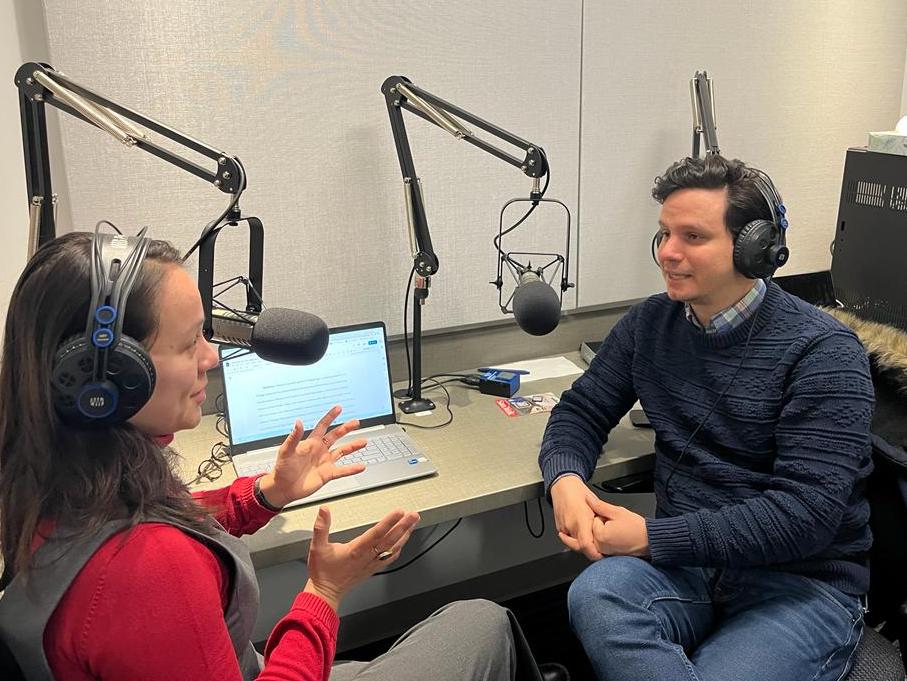
In this episode of Global Stage, Alisha Holland, Gates Professor of Developing Societies at Harvard University, joins host Patrick McQuestion to discuss the politics behind large infrastructure projects in Latin America.
Drawing on research from her current book project, Holland explains how projects such as highways, subways, and refineries shape economic development while posing unique political challenges. Because these projects require large upfront investments and often take longer than a single political term to complete, they create complicated incentives for democratic leaders deciding whether – and how – to pursue them.
Holland traces how the concept of “infrastructure” rose to prominence in the late twentieth century, gradually replacing the older term “public works.” As governments opened their economies and moved away from traditional industrial policy, infrastructure investment became a central strategy for promoting economic growth – improving transportation networks, ports, and other systems that support markets and commerce. At the same time, the role of the state has shifted dramatically. Where governments once directly built projects through large public works ministries staffed by engineers and construction crews, today they increasingly contract private firms to carry out these projects, transforming the state’s role into one focused on managing contracts and financing arrangements.
This shift has also changed the political incentives surrounding infrastructure. According to Holland, large contracts can become tools for campaign finance, particularly in contexts where construction is a major industry and oversight is weak. Politicians may sign lucrative infrastructure contracts that benefit private firms while generating financial support for electoral campaigns. In many cases, these agreements are made near the end of a politician’s time in office – when they can secure funding but leave the long-term costs and project completion to their successors.
Yet the story does not end with the “rise” of infrastructure. Holland also examines why many projects stall or fail to materialize. Stronger oversight institutions, bureaucratic review, and citizen participation – such as consultations with local or Indigenous communities – can slow projects or halt them altogether. While this can reduce corruption and ensure projects better serve the public, it can also limit the quantity of infrastructure that governments ultimately build. The result, Holland argues, is a fundamental trade-off between speed and accountability: societies must balance the desire for rapid development with the need for oversight, transparency, and projects that truly benefit citizens.
Links:
- Learn more about Alisha Holland.
- Learn more about the Kellogg Institute.
Listen:
Listen below, ask your smart device to “play Global Stage Podcast,” or find us on:
Apple | Spotify | Stitcher | iHeartRadio | TuneIn | YouTube