



Global Stage Podcast
 About the Episode:
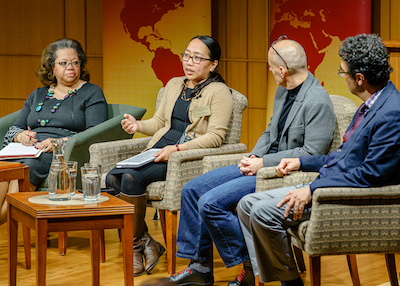
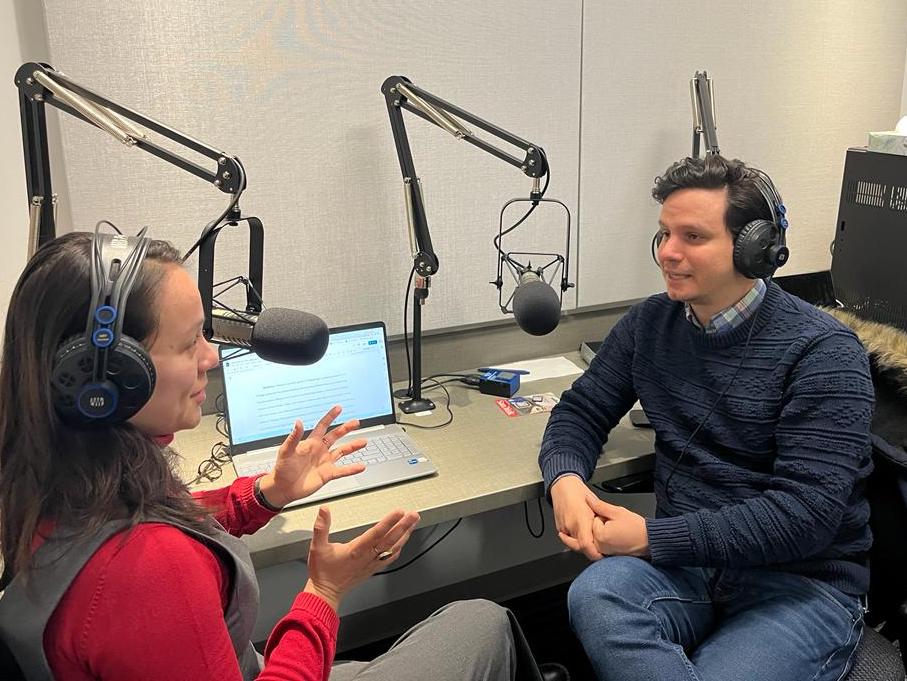
In this special edition of Global Stage recorded at the 2026 Global Democracy Conference, Kellogg Doctoral Affiliate Patrick McQuestion sits down with Hesham Kassem and Ambassador Norm Eisen to discuss the sociological drivers of autocratic popularity and how to dismantle them. They examine practical strategies for influencing the court of public opinion and creating an emotionally compelling democratic narrative that rivals autocratic appeals. Drawing from real-world insights across Eastern Europe and North Africa the guests highlight key anti-corruption tactics and actionable takeaways, including from the Brookings Institute’s Democracy Playbook.
Show Notes:
In this special edition of Global Stage, recorded in conjunction with the Kellogg Institute’s Global Democracy Conference, host Patrick McQuestion speaks with veteran Egyptian publisher and pro-democracy activist Hisham Kassem and Ambassador Norm Eisen, a senior fellow in governance studies at the Brookings Institution. Their conversation examines a central challenge facing democratic movements today: why authoritarian leaders can remain politically compelling, and what pro-democracy actors can do to build stronger alternatives.
Eisen argues that defending democracy requires winning not only in the “court of law” but also in the “court of public opinion.” Drawing on examples ranging from Serbia’s Otpor movement to contemporary Hungary, he emphasizes the importance of emotionally resonant communication, effective messengers, and political arguments rooted in people’s everyday concerns. Kassem similarly argues that appeals to democracy, good governance, and human dignity are not enough on their own: citizens need to see clearly how democratic change will improve the material conditions of their lives.
Kassem draws extensively on Egypt’s experience under military rule to explain how authoritarian leaders cultivate popular support. He describes a recurring pattern in which new rulers initially market themselves as the answer to the failures of their predecessors, adopting identities and narratives suited to the moment. When those promises fail to deliver, he argues, repression increasingly replaces persuasion. The discussion also turns to the economic foundations of authoritarian rule in Egypt, including the military’s role in the economy and the repeated external support that has helped sustain the existing system.
Looking ahead to democratic transitions, Eisen cautions that political and economic reforms must avoid simply returning power and resources to former authoritarian elites. He and Kassem also consider what recent experiences in Brazil, Poland, and Hungary can teach democratic movements about coalition-building, leadership, independent media, and alternative channels of communication. While Kassem remains deeply concerned about Egypt’s prospects, he closes with a practical measure of democratic success: movements must move beyond ideology and demonstrate that they can deliver tangible results in people’s daily lives.
Links:
- Learn more about Hisham Kassem.
- Learn more about Ambassador Norm Eisen.
- Learn more about the Kellogg Institute at the University of Notre Dame.
Listen
Listen below, ask your smart device to “play Global Stage Podcast,” or find us on:
Apple | Spotify | Stitcher | iHeartRadio | TuneIn | YouTube