



Global Stage Podcast
 About the Episode:
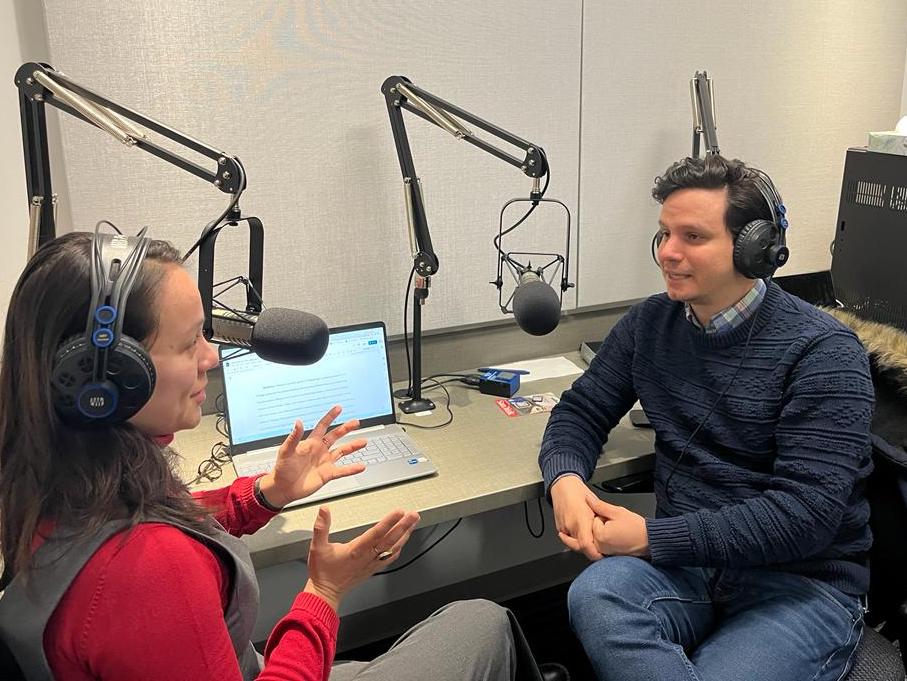
In this episode, Kellogg Doctoral Affiliate Eugenia Aguirre-Raftacco sits down with Ben Ross Schneider, Ford International Professor of Political Science at Massachusetts Institute of Technology and Director of the MIT Chile Program, to talk about democracy, development, and political economy in Latin America. They discuss how institutions, business, and inequality shape political and economic outcomes, as well as the challenges facing democracies in the region. Schneider also reflects on his research and the broader lessons Latin America offers for understanding contemporary democracy and development.
Show Notes:
Expanding access to school has been a major achievement in Latin America, but ensuring that students learn remains a serious challenge. In this episode of Global Stage, host Eugenia Aguirre, a PhD student in political science at the University of Notre Dame and Kellogg Doctoral Affiliate, welcomes Ben Ross Schneider, Ford International Professor of Political Science at MIT and director of the MIT Brazil Program. Drawing on his research on education politics, Schneider asks why weak learning outcomes have not generated greater political pressure for change.
Teachers and their unions are central to the answer. Schneider explains that policies designed in a ministry cannot improve classroom teaching without the participation of the people expected to carry them out. He discusses the influence of teacher unions, the need to negotiate reforms that teachers can support, and the gaps in researchers’ understanding of how unions operate. For voters assessing campaign promises, he suggests looking for detailed proposals and coalitions capable of sustaining reform across changes in government.
The discussion also considers education’s role in preparing people to participate in democracy. Beyond helping students find work and improve their economic prospects, schools can help them evaluate information, understand political choices, and become informed citizens. Turning to democratic backsliding, Schneider reflects on Brazil’s experience under Jair Bolsonaro and the subsequent recovery of democratic institutions. He points to the judiciary and organized civil society as important sources of resistance.
Schneider also examines the difficulties of governing Brazil amid intense polarization and the growing power of Congress. His research on antitrust regulation raises questions about how public agencies can maintain independence from political and business interests. He closes with advice for graduate students studying Latin American political economy: make time for foundational thinkers, including Albert Hirschman, Cardoso and Faletto, and Peter Evans, before the pressure to follow the latest research takes over.
Links:
- Learn more about Ben Ross Schneider.
- Learn more about the Kellogg Institute.
Listen
Listen below, ask your smart device to “play Global Stage Podcast,” or find us on:
Apple | Spotify | Stitcher | iHeartRadio | TuneIn | YouTube