Scott Mainwaring
General
I am currently in my thirteenth year as director of the Kellogg Institute for International Studies at Notre Dame. My main research interests have revolved around political parties and party systems, democratic and authoritarian regimes, political institutions, and the Catholic Church and politics in Latin America.
Teaching interests
I love teaching at both the undergraduate and graduate levels. In 2005, I won the James C. Burns, CSC Graduate School Award, given annually to a Notre Dame faculty member for distinguished teaching of graduate students.
Current Book Project
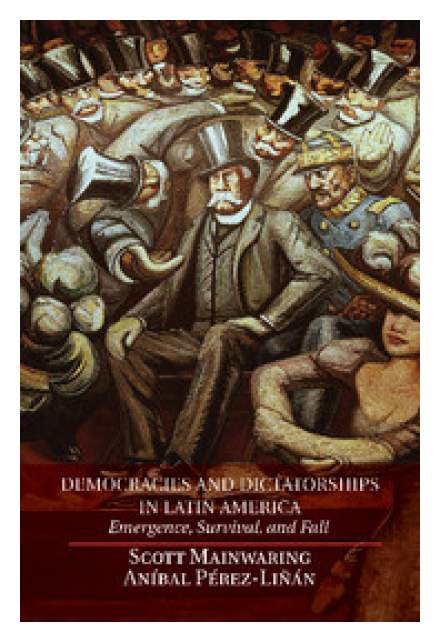
A book coauthored with Aníbal Pérez-Liñán, has been accepted by Cambridge University Press. The Emergence and Fall of Democracies and Dictatorships: Latin America since 1900 has two primary ambitions. The book contributes to theoretical debates about the survival or fall of democratic and authoritarian regimes, and it also explains the occurrence of waves of democratization and authoritarianism in Latin America. The first part of our book presents a theory about the politics of regime change and survival. We reclaim political factors as the main explanation for regime dynamics. The normative values and policy preferences of domestic actors, as well as the influence of international actors, are at the core of our theory. We counterpose our theory to analyses that argue that the survival of regimes depends largely on structural factors such as the level of development, the class structure, or income inequalities, or to mass political culture. Consistent with a growing body of literature that has recognized the importance of international diffusion, we underscore that the survival or fall of political regimes depends not only on domestic actors, but also on transnational forces.
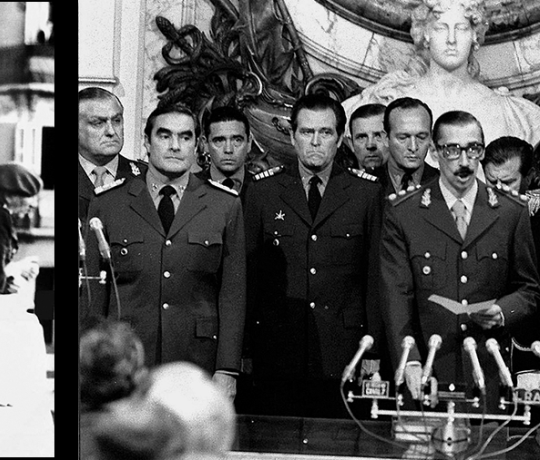
To test our theory of regime change and stability, we rely on a combination of quantitative and qualitative tests. In Chapter 4 we employ advanced statistical techniques to test whether our theory holds up for twenty Latin American countries in 1945-2005 (for a total of 1220 country-years). In Chapters 5-6 we conduct a qualitative case study of Argentina and El Salvador. Our analysis of Argentina shows that our approach provides a better explanation for why the country experienced chronic instability between 1930 and 1983. This book offers the first extended analysis of regime emergence and fall for Latin America from a region-wide perspective and over a long period of time.
Aníbal and I plan to finish the book in the summer of 2012.
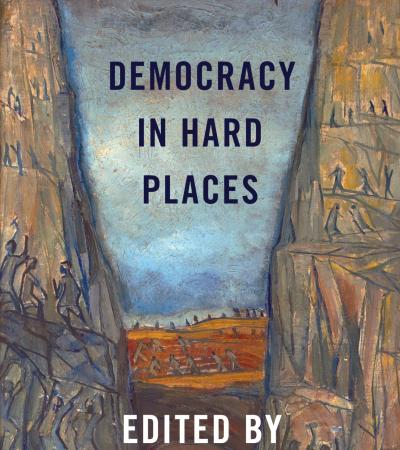
Conference to Honor Guillermo O'Donnell
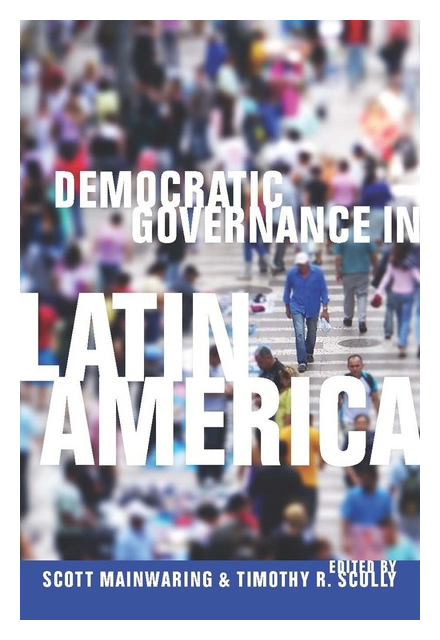
The book addresses why some policies and countries have been more successful in democratic governance than others, focusing on Latin America in the post-1990 period. We hope to contribute toward understanding why some policies and countries have been relatively successful in the midst of many failures. Whereas some analysts tend to generalize for Latin America as a whole, our volume underscores the striking diversity in success in democratic governance. |
|
2010 News
Mainwaring Elected to American Academy of Arts and Sciences
Selected Publications and Datasets
Latin America: Eight Lessons for Governance
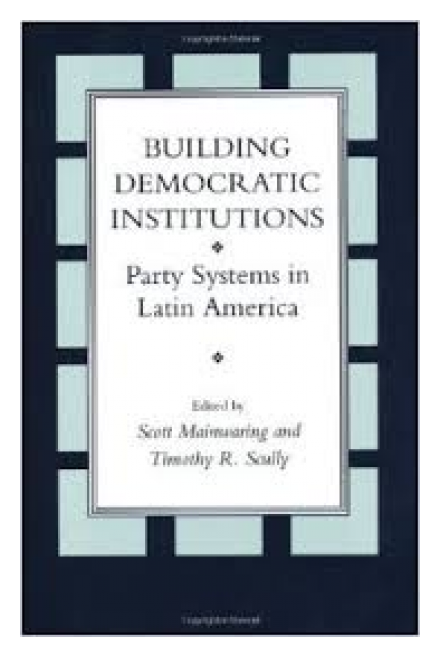
Scott Mainwaring and Timothy R. Scully
Political Regimes in Latin America, 1900-2007 (with Daniel Brinks and Anibal Perez Liñán)
Coding US Foreign Policy Toward Authoritarian and Democratic Regimes in Latin America, 1900-2007
US Foreign Policy Dataset (SPSS)
Democratic Governance in Latin America